Best Places to Visit in Namibia
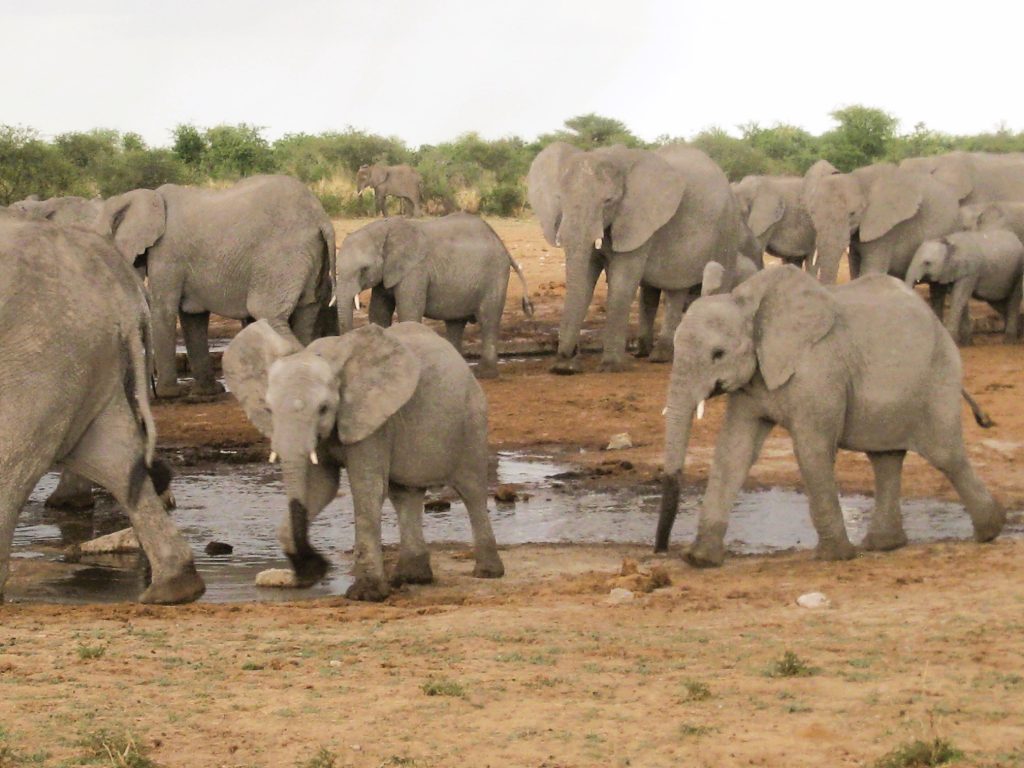
Four places carry almost every Namibian itinerary: Sossusvlei, Swakopmund, Etosha and Damaraland. Everything else is an addition to that spine. Ten days covers the four comfortably, fourteen adds the northwest or the south, and anything under a week means choosing two. The order matters less than allowing enough nights at each.
The Four That Anchor Everything
Almost every Namibian route is built from the same four places, and there is a reason.
Sossusvlei delivers the red dunes and Deadvlei, which is the image that sells the country. Swakopmund provides the coast, the adventure activities and a change of pace. Etosha is the wildlife. Damaraland offers rock art, desert adapted elephant and the emptiest country most visitors will reach.
They are spread around a rough circuit from Windhoek, which makes the geography work: south to the dunes, west to the coast, north to Damaraland, east to Etosha and back.
Ten days covers those four properly. Seven means dropping one, usually Damaraland.
Everything else in this article is an addition to that spine rather than an alternative to it.
Give each of the four anchors three nights rather than two if you have to choose between adding places and adding time. Two nights at Etosha means one full game day; three means two, plus a second chance if the first is quiet. Travellers who add a fifth destination at the cost of a night everywhere consistently regret it, because Namibian driving days are long and arriving somewhere is not the same as seeing it.
Sossusvlei and the Namib
The dunes are the reason most people book Namibia and they justify it.
Deadvlei is the famous image: a white clay pan with dead camel thorn trees, several hundred years old, standing against a red dune. It needs the first ninety minutes after sunrise, when the dune behind is still in shadow and the trees catch direct light.
Dune 45 is the accessible climb at around 170 metres, taking forty minutes to an hour up the ridge. Big Daddy is the serious one at around 325 metres, one to two hours of soft sand with a descent straight down the face into Deadvlei.
Sesriem Canyon sits near the gate, a narrow gorge you walk into on the floor, covered by the same park fee and taking forty minutes.
Where you sleep decides what you photograph. Four properties sit inside the Sesriem gate and the inner gate opens an hour before the outer one, which is the whole difference.
Two to three nights. Three if you want a balloon flight with a spare morning against cancellation.
Swakopmund and the Coast
The coast is where a Namibian trip changes pace and it does more work than visitors expect.
Swakopmund is a German colonial town on the Atlantic with bakeries, restaurants and the country’s densest activity market: sandboarding, quad biking, tandem skydiving, living desert tours and scenic flights.
Walvis Bay half an hour south holds the lagoon, where a free paved boardwalk runs several kilometres with flamingos feeding within metres, and catamaran cruises to Pelican Point where seals climb aboard.
Sandwich Harbour south of that needs a guided 4×4 trip on the tide, where the dunes fall directly into the Atlantic.
Cape Cross north of Swakopmund holds the largest land based seal breeding colony in the world.
The living desert tours are the outstanding value, finding chameleons, geckos and sidewinding adders that are invisible without a guide reading tracks.
Two to three nights. Three if activities are the point, since afternoon wind cancels things.
Etosha
The wildlife anchor and a park that works differently from most.
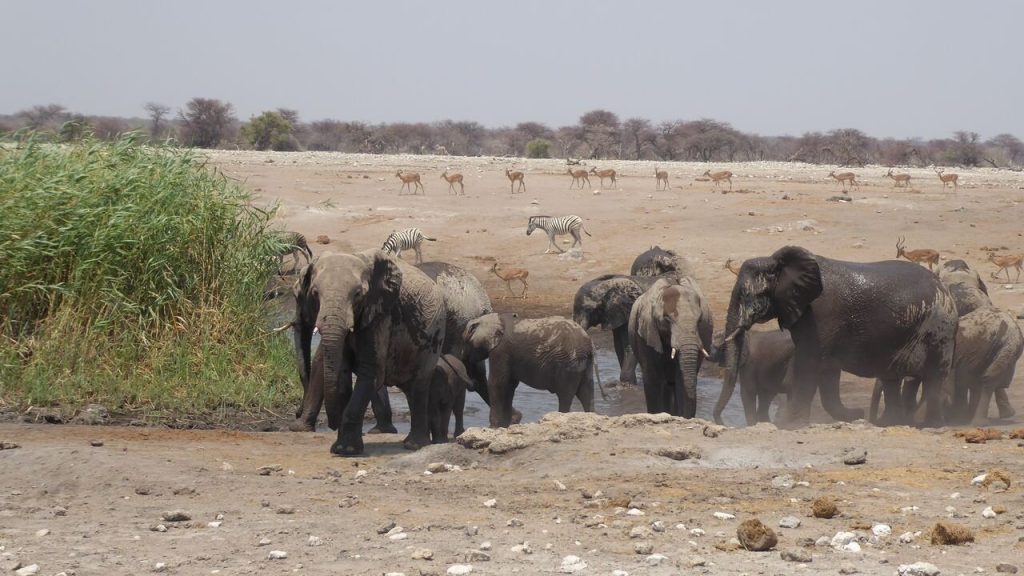
Etosha has no perennial rivers at all, so in the dry season every animal must come to a small number of springs and boreholes. The technique is to park at a waterhole, switch off and wait rather than driving between sightings.
The three main rest camps at Okaukuejo, Halali and Namutoni each have a floodlit waterhole just inside the fence, lit all night and watched on foot from a platform. Okaukuejo produces black rhino most nights.
That night viewing is available only to guests staying inside the park, and campers get identical access to chalet guests.
Four of the Big Five occur here. Buffalo are absent entirely, excluded on veterinary grounds.
Three nights across two camps beats three in one, since it puts you at different waterholes at dawn.
Damaraland
The fourth anchor and the one most likely to be cut, which is a mistake.
Twyfelfontein holds one of the largest concentrations of rock engravings in Africa and was Namibia’s first UNESCO World Heritage Site. Guided circuits are compulsory and short.
Desert adapted elephant work the dry riverbeds, with around 150 across five ephemeral river systems. Sightings depend on where the herds have moved that week.
The Palmwag Concession north of it holds the largest free roaming black rhino population on earth, tracked on foot with community trackers, which is available in no other country.
Brandberg holds the White Lady painting, reached on a five kilometre guided walk into the Tsisab Gorge.
Spitzkoppe on the way in or out offers granite boulders, a rock arch and one of the best campsites in Africa.
Two to three nights, or longer if rhino tracking is the priority.
The Best Additions
If you have longer than ten days, these are the places worth the extra time.
The south. Fish River Canyon, the Quiver Tree Forest, the wild horses at Aus and Kolmanskop. Four to five days from Windhoek and back, mostly on tar.
The northwest. Kaokoland, Opuwo and Epupa Falls on the Kunene. Remote, demanding and the country most visitors never reach.
The northeast. The Zambezi Region for buffalo, hippo, sitatunga, red lechwe and the country’s richest birding. Over 1,200 kilometres from Windhoek.
The Kalahari. Red dunes and habituated meerkats within a few hours of Windhoek, which makes it the easiest first or last night in the country.
The Underrated Ones
Several places consistently outperform their reputation.
Okonjima, between Windhoek and Etosha, runs collared leopard and cheetah tracking with radio telemetry, giving sighting odds no national park matches. It also breaks the drive north.
The Erongo Mountains hold rock art including the White Elephant at Phillip’s Cave, granite formations, and a private conservancy of around 2,000 square kilometres formed by 30 landowners dropping their fences.
Waterberg Plateau Park is a conservation success story and the site of the 1904 battle that began the Herero genocide, which is the weightier reason to go.
The Naukluft Mountains hold perennial pools deep enough to swim in, an hour from country that receives almost no rain, with two day trails needing no booking.
Lüderitz and Kolmanskop, at the end of a long southern drive, deliver a diamond ghost town half filled with sand.
What to Skip and When
Being honest about this saves people days.
The Skeleton Coast north of the Ugab gate requires a permit, and self drivers can go no further than Terrace Bay. Everything beyond is concession area reachable only by fly in. The southern section is a long austere drive that many find repetitive.
Khaudum requires two 4x4s in convoy, three days of food per person and 100 litres of water per vehicle, with unfenced camping among lion and elephant. It is not a casual addition.
Kaokoland beyond Epupa is expedition driving requiring recovery gear, extra fuel and preferably a second vehicle. Van Zyl’s Pass is prohibited under most rental agreements.
The Zambezi Region is genuinely excellent and genuinely far. Adding it to a two week trip means two long driving days each way unless you fly.
Fish River Canyon and Lüderitz are a substantial southern detour for largely scenic attractions, which suits some travellers and not others.
Building Your Route
A few structural points that decide whether an itinerary works.
Seven days means two anchors, typically Sossusvlei and Swakopmund, or Etosha and Damaraland. Attempting four in a week produces a driving trip.
Ten days covers the four anchors at two to three nights each, which is the standard Namibian trip and works well.
Fourteen days adds the south or the northwest comfortably, or gives three nights everywhere on the standard circuit.
Twenty one days reaches the Zambezi Region, Kaokoland or a combination with Botswana.
Plan driving times at 100 kilometres an hour on tar and 50 to 60 on gravel, and never drive after dark outside towns.
Best Places in Namibia Questions
What are the must see places in Namibia?
Four anchor almost every itinerary: Sossusvlei for the red dunes and Deadvlei, Swakopmund for the coast and adventure activities, Etosha for wildlife, and Damaraland for rock art, desert adapted elephant and rhino tracking. They sit around a rough circuit from Windhoek, and ten days covers all four properly at two to three nights each.
What can I see in a week?
Two anchors, done properly. Sossusvlei and Swakopmund is the usual pairing, or Etosha and Damaraland if wildlife matters more than dunes. Attempting all four in seven days produces a driving trip where you arrive everywhere and see nothing. Namibian driving days are long and arriving somewhere is not the same as seeing it.
Which is better, Sossusvlei or Etosha?
They answer different questions and most itineraries include both. Sossusvlei is the scenery, delivering the image that sells Namibia, and needs early morning access to work. Etosha is the wildlife, working through waterhole concentration in the dry season with floodlit night viewing available to anyone staying inside the park. If you can only do one, choose by whether you came for animals or country.
What is the most underrated place in Namibia?
Okonjima, between Windhoek and Etosha, which runs collared leopard and cheetah tracking with radio telemetry and gives sighting odds no national park matches, while conveniently breaking the drive north. The Erongo Mountains and the Naukluft, where perennial pools deep enough to swim in sit an hour from country receiving almost no rain, are the others.
Is Damaraland worth including?
Yes, and it is the anchor most often cut. Twyfelfontein was Namibia’s first UNESCO World Heritage Site with one of the largest concentrations of rock engravings in Africa. The Palmwag Concession holds the largest free roaming black rhino population on earth, tracked on foot, which is available in no other country. Desert adapted elephant work the dry riverbeds.
What should I skip?
Depends on your time. The Skeleton Coast beyond Terrace Bay needs a fly in, and the southern section is a long austere drive many find repetitive. Khaudum requires two vehicles in convoy and full self sufficiency. Kaokoland beyond Epupa is expedition driving. The Zambezi Region is excellent and two long driving days each way unless you fly.
How long do I need in Namibia?
Ten days for the four anchors at two to three nights each, which is the standard trip. Fourteen adds the south or the northwest comfortably, or gives three nights everywhere on the standard circuit. Twenty one reaches the Zambezi Region, Kaokoland or a combination with Botswana. Seven means choosing two anchors and doing them properly.
Booking Your Namibia Trip
The safari companies and tour operators listed on this website put trips like this together for a living and know which camps, guides and routes actually deliver. We are an independent guide to Namibia; we do not book or sell tours ourselves.
When you are ready, arrange your safari, tour or holiday with one of the recognised operators listed here. Tell them your dates and what matters most, and a real person, not a form, will handle the itinerary, park bookings and logistics for you.