Ongava Private Game Reserve
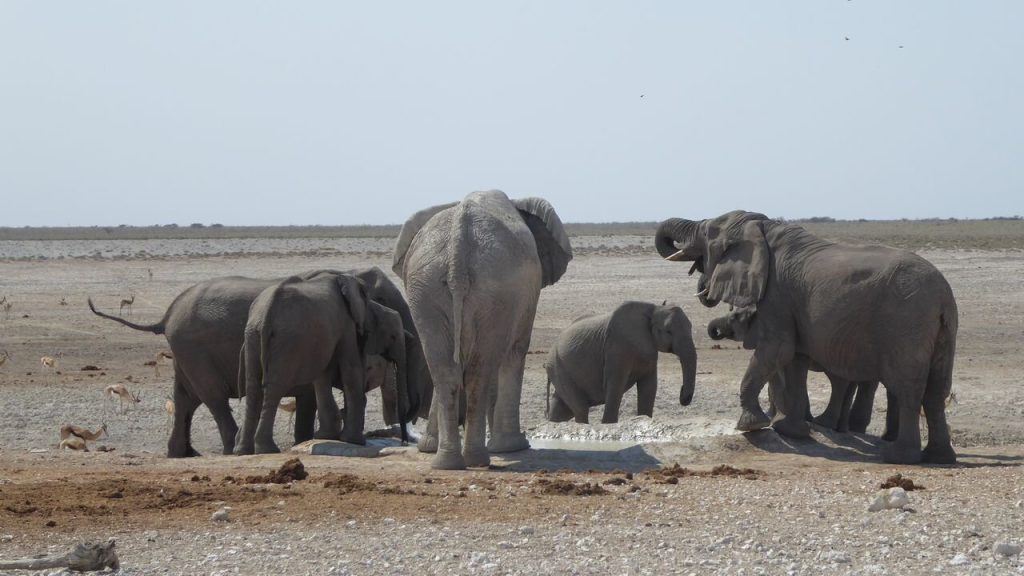
Ongava is a 30,000 hectare private reserve sharing a boundary with Etosha National Park‘s southern edge, holding both black and white rhino and one of Namibia’s most substantial wildlife research operations. Guests get guided night drives, walking safaris and rhino tracking on foot, none of which the national park permits, plus day trips into Etosha itself. Four lodges operate on the reserve.
What Ongava Offers That Etosha Cannot
The case for staying here rather than in the park comes down to what you are allowed to do. Inside Etosha you must stay in your vehicle, driving after gate closing is prohibited, and walking outside designated points is not permitted.
On Ongava the rules are the reserve’s own. Off road game drives, night drives with spotlights, guided walking with an armed guide and photographic hides at waterholes are all available. Rhino tracking on foot is the headline, and this is among the few places in Africa where you can get genuinely close to white rhino on foot with a trained guide.
Guests also take day drives into Etosha, so you are not choosing between the two. A typical stay mixes a morning in the national park with an afternoon and night on the reserve, which is a stronger combination than either alone.
Book Ongava for the activities and the park camps for the floodlit waterholes, rather than treating them as alternatives. Two nights inside Etosha at Okaukuejo followed by two at Ongava gives you the all night rhino viewing and the walking, night drives and hides. Travellers who pick only one usually wish they had done both.
Rhino Conservation and the Ongava Research Centre
The name is the Herero word for rhino, which tells you the priority. Ongava holds both black and white rhino and is among the more important private custodians of black rhino in Namibia, with a genuine chance of seeing both species on a stay of a few days.
The reserve was created when several families bought up four unproductive cattle ranches and converted them, restoring land where lions had previously been shot on sight. Those same plains now hold established prides.
The Ongava Research Centre operates on the reserve and does substantial work rather than decorative conservation messaging. A major rhino genetics study established paternity across the population and now guides breeding management decisions. The associated visitor centre has a self guided exhibition area covering the reserve’s history, its flora and fauna and the science being done, which guests can walk through in their own time.
This matters practically, not just ethically. Guides here are unusually well briefed because the research is happening on the property rather than being cited from elsewhere.
Wildlife on the Ongava Reserve
The reserve carries high densities across 30,000 hectares of restored bush, mopane and open plain in the foothills of the Ondundozonanandana range.
Lion are established and heard more often than seen, with roaring carrying across the reserve at night. Both rhino species are present. Elephant move through. Plains game is abundant: giraffe, zebra, oryx, kudu, eland, springbok, red hartebeest and wildebeest, along with warthog and black faced impala.
Leopard occur and are difficult here as everywhere. Spotted and brown hyena, black backed jackal, bat eared fox and honey badger fill out the predator list, with night drives the way to see most of them. Birdlife is strong, and the waterhole hides are as productive for birds as for mammals.
Lodges on the Ongava Reserve
Four properties operate here and they serve quite different travellers.
Ongava Lodge. Fourteen rock and thatch chalets on a ridge overlooking a busy waterhole, with a pool and dining decks. The classic option and the most straightforward.
Little Ongava. Three suites only, perched on a rocky outcrop, each with a private plunge pool, sala and indoor and outdoor showers. Dedicated guide and vehicle. Among the most exclusive stays in Namibia.
The tented camp. Eight walk in tents in a hidden valley at the foot of a dolomite hill, facing a floodlit waterhole. En suite with private verandas. More intimate and less formal than the lodge.
Anderssons at Ongava. Family friendly and built around the Ongava Discovery Centre, so the science is part of the stay. The strongest choice for travellers who want the research side.
A smaller property taking a maximum of six guests also operates, aimed at exclusive use bookings. All the lodges are built from local materials and all are fully inclusive of meals and activities, with rates at the upper end of the Namibian market.
Photographic Hides and Waterhole Viewing
The hides are the underrated part of an Ongava stay and the reason photographers book here at all.
Sunken or ground level hides put you at eye height with animals drinking, which produces images no vehicle can. Sitting in one for two or three hours with a guide is a very different rhythm from a game drive, and rhino, elephant and plains game all use the waterholes through the day.
The lodges themselves overlook waterholes, so game viewing continues from the dining deck and from private verandas. Several guests report seeing more from the lodge than on a drive, which is a fair description of how these reserves work.

Etosha Day Trips from Ongava
Ongava sits close to Andersson Gate in the south, which puts the Okaukuejo area within easy reach for a day drive.
Guided excursions run into the park for a few hours, working the southern waterhole circuit around Okaukuejo, Nebrownii, Okondeka and Gemsbokvlakte. Having a guide who works this ground daily changes what you see compared with self driving, since they know which holes are producing that week.
What you cannot do from outside the fence is the floodlit waterhole after dark, since those are open only to guests staying inside the park. That is the one thing Ongava cannot replicate, and it is the reason for splitting a stay.
Who Ongava Suits and Who It Does Not
It suits travellers who want guided rather than self drive, who care about walking and night drives, who want comfortable rooms and good food, and who are willing to pay upper tier rates for it.
It suits photographers particularly well because of the hides and the off road driving.
It does not suit travellers on a tight budget, since the park rest camps deliver more animals per dollar by a wide margin. It also does not suit anyone whose priority is the open, unmanaged feel of a national park, since a private reserve is a managed system and the same lion may be seen by every vehicle that week. Being clear about that trade before booking prevents disappointment.
Best Time to Visit Ongava
May to October is the dry season and the strongest window, with July through September the peak. Water becomes scarce, animals concentrate at the reserve’s waterholes, and the hides come into their own. Nights are cold, dropping to single figures, and open vehicle drives before dawn are genuinely chilly.
The green season from November to April brings heat, thunderstorms, dispersed game and thick vegetation that makes tracking harder. Birding improves sharply and rates fall. Rhino tracking runs year round and is easier when animals are tied to fewer water points.
Getting to Ongava
The reserve sits on Etosha’s southern boundary near Andersson Gate, roughly 440 kilometres and four and a half to five and a half hours north of Windhoek via Otjiwarongo and Outjo. The access is straightforward and the final run in is a short gravel stretch.
Most guests either self drive and leave the vehicle at the lodge, or fly in by light aircraft to the reserve’s airstrip from Windhoek, Sossusvlei or Damaraland. Charter transfers are usually quoted separately from the nightly rate, so confirm whether flights are included when comparing prices.
Ongava Game Reserve Questions
What does a stay at Ongava cost?
Rates sit at the upper end of the Namibian market and are fully inclusive of accommodation, meals, guided activities and reserve fees. Expect roughly 400 to 700 US dollars per person per night at Ongava Lodge and the tented camp, rising considerably at Little Ongava, which is among the most expensive properties in the country. Light aircraft transfers are usually quoted separately. Compare that with roughly 900 to 2,500 Namibian dollars a night at the Etosha rest camps, where activities and meals are extra.
Can you track rhino on foot at Ongava?
Yes, and it is the reserve’s signature activity. Guided walking with an armed guide brings you close to white rhino on foot, which is possible in only a handful of places in Africa. Black rhino are also present and tracked, though they are more unpredictable and guides keep greater distance. Reasonable fitness is needed and minimum ages apply.
Is Ongava better than staying inside Etosha?
Different rather than better. Ongava gives guided drives, night drives, walking, rhino tracking on foot and hides, none of which the park permits, along with far better rooms and food. The park rest camps give the floodlit waterholes all night, dawn access and a fraction of the cost. The strongest answer is splitting a stay between the two, which many experienced visitors do.
Can I visit Etosha from Ongava?
Yes. The reserve sits close to Andersson Gate and lodges run guided day drives into the national park, usually working the southern waterhole circuit around Okaukuejo for a few hours. What you cannot do is the floodlit waterhole after dark, since those are available only to guests staying inside the park boundary.
How many nights should I spend at Ongava?
Two to three. One night gives you a single activity cycle and does not justify the transfer or the rate. Two allows a night drive, a walk, time in a hide and a day drive into Etosha. Three gives a realistic chance of seeing both rhino species and using the research centre properly.
Is Ongava suitable for children?
Anderssons at Ongava is the family friendly property and is built around the Discovery Centre, which works well for older children. Other lodges set minimum ages and some require families with younger children to book a private vehicle at additional cost. Walking activities and rhino tracking on foot carry higher minimums again. Check the policy for the specific property before booking.
Is the wildlife at Ongava wild or managed?
It is a fenced private reserve, so the system is managed rather than open, and that is worth knowing before booking. Animals are free ranging within 30,000 hectares, populations are monitored and rhino breeding is guided by genetics research. What that means practically is high sighting reliability and a smaller area, so the same lion may be seen by several vehicles in a week. Some travellers value the reliability and others prefer the open feel of the national park.
Booking Your Namibia Trip
The safari companies and tour operators listed on this website put trips like this together for a living and know which camps, guides and routes actually deliver. We are an independent guide to Namibia; we do not book or sell tours ourselves.
When you are ready, arrange your safari, tour or holiday with one of the recognised operators listed here. Tell them your dates and what matters most, and a real person, not a form, will handle the itinerary, park bookings and logistics for you.