Namibia Packing List
Pack for a forty degree temperature swing in a single day and you have solved most of it. A June morning at Sossusvlei can be near freezing and the same afternoon in the mid twenties. The items travellers most often lack are a warm jacket, enough water capacity and the right plug adapter. This is the working list by category.
Clothing
Practical, neutral and layered rather than fashionable.
Lightweight long sleeved shirts and trousers in neutral colours do the most work, protecting against sun, mosquitoes after dusk and thorns. Khaki, olive, brown and grey work best; bright colours and white are conspicuous on walking safaris and show dust badly.
Avoid camouflage patterns, which are prohibited or frowned upon in several countries in the region.
A fleece or down jacket, a windproof shell, long trousers, a warm hat and gloves for May to September. This is the category people most often underpack.
Shorts and t-shirts for daytime, a swimming costume for lodge pools, which you will use more than expected.
Something modestly smart for dinner at better lodges, though nothing formal is required anywhere in Namibia.
Pack less than you think. Most lodges offer laundry and dust means you will re-wear things anyway.
Test your warm layer against this scenario before packing it: standing still, outdoors, on an unlit concrete platform at Okaukuejo at ten at night in July, watching a black rhino drink. That is the coldest you will be on the trip and it is also the best hour of it. Visitors abandon that sighting every night because they came out in a shirt.
Footwear
Three pairs cover everything.
Closed walking shoes or light boots with grip are the priority, since Namibian terrain is rock, gravel, thorn and sand. Sandals are inadequate for the Fish River Canyon rim, the Naukluft trails, Spitzkoppe granite, Sesriem Canyon, the Tsisab Gorge at Brandberg and the Waterberg.
Sandals or flip flops for camps, lodges and the beach.
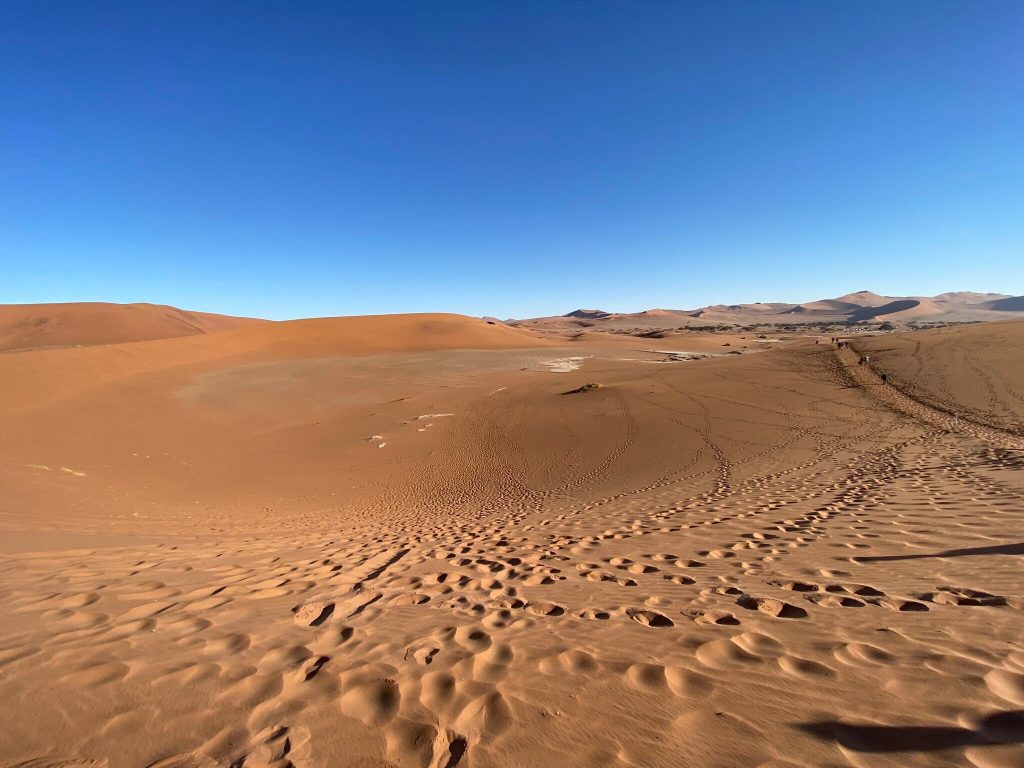
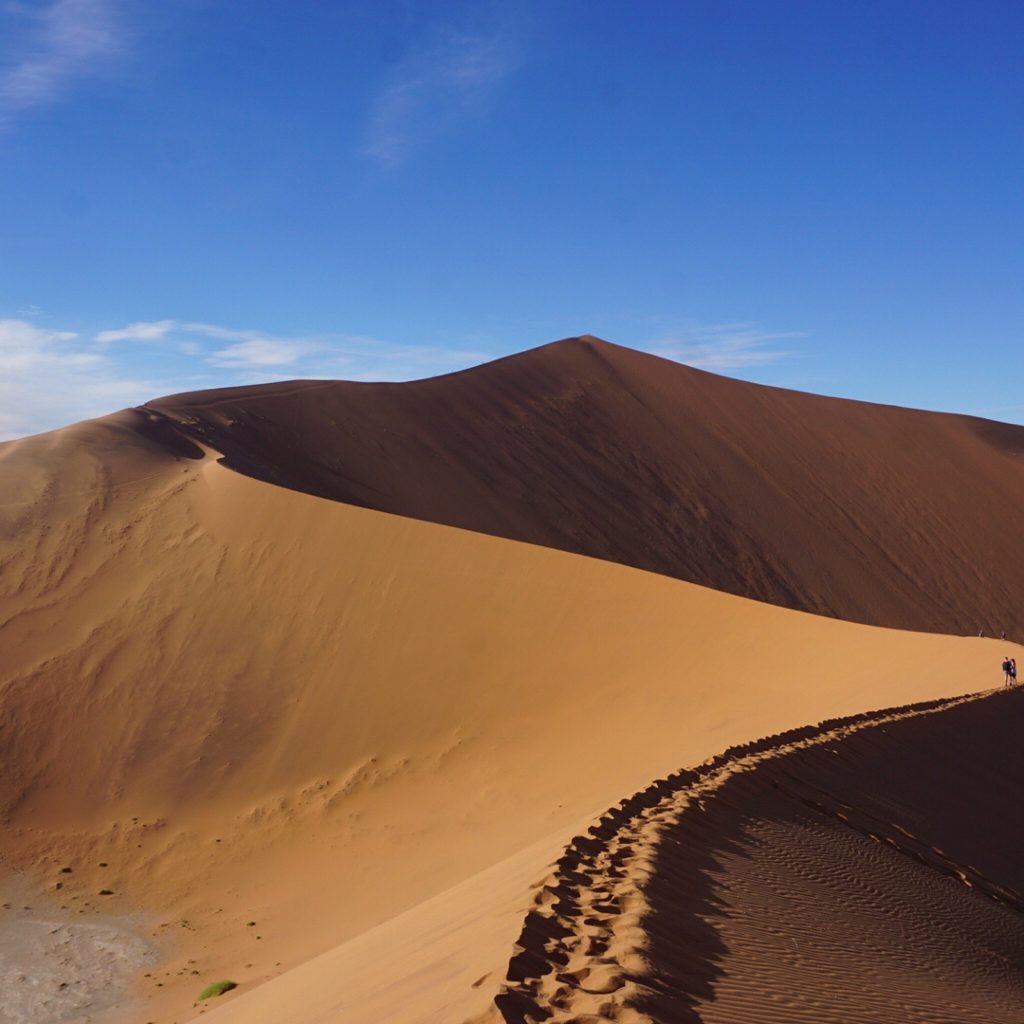
Something you do not mind filling with sand for dune climbing. Many people climb Dune 45 and Big Daddy barefoot, which is easier in cool sand and a bad idea once the surface has heated.
Proper hiking boots only for the multi day trails at Fish River Canyon, the Naukluft or Waterberg, where they matter rather than being optional.
Sun and Heat
Namibia gets around 300 days of sun a year and glare reflects off sand and gravel from below and above.
High factor sunscreen in quantity, more than you use at home because you are outdoors more and reapplying constantly.
A wide brimmed hat rather than a cap, since ears and neck burn readily. Something with a chin strap survives coastal wind and dune crests.
Good sunglasses. Glare off the Etosha pan, the Sossusvlei sand and the water at Walvis Bay is severe.
Lip balm with sun protection, which sounds trivial until day three.
Moisturiser, because the air is exceptionally dry and skin cracks.
Electrolyte sachets, since you lose salt without noticing in dry heat.
Water and Vehicle
Carrying capacity matters more than any single item on this list.
Refillable bottles per person, ideally insulated, plus a larger container in the vehicle. Four to five litres per person per day is the working figure for active days.
There is no water on the Olive Trail, none at Big Daddy, none in the Tsisab Gorge and none on most of the Fish River route between pools.
A cool box is standard in rental vehicles and worth confirming at booking.
Jerry cans if you are going beyond Opuwo, into Kaokoland or Khaudum, since deep sand roughly doubles fuel consumption.
A tyre pressure gauge, and knowledge of where the spare, jack and wheel spanner are. Check the spares are serviceable rather than merely present.
Firewood is sold cheaply at filling stations, farm stalls and campsites, so buy as you go rather than carrying a week’s worth.
Camping Additions
If you are camping, add these to everything above.
A proper sleeping bag rated for cold. Desert and Etosha nights drop close to freezing between May and August and rental bedding is frequently inadequate. Check what is provided and supplement it.
A head torch with a red setting, which preserves night vision and is needed for the ladder down from a rooftop tent.
A camp chair if not included in the rental kit.
Matches or a lighter, and a decent knife.
Rent the vehicle with the full camping package rather than assembling your own. Namibian companies supply tent, bedding, table, chairs, cooking equipment, cool box and water containers fitted properly to the vehicle, which costs less and fits better than anything you bring.
Practise setting up and packing the tent before your first night, particularly if travelling alone.
Electrical and Navigation
Namibia uses type D and type M plugs, the large round pin South African style, on 220 to 240 volts.
Bring the right adapter. Travellers arriving with only European or UK adapters find they cannot charge anything, and this is among the commonest oversights.
A car charger and a power bank for self drive trips, since you will be in the vehicle for long stretches and some campsites have no power.
Download offline maps before travelling. Coverage is good in towns and on main routes and absent across large areas including Kaokoland, much of Damaraland and stretches of the coast.
A local SIM is cheap and available at the airport and in towns, and works where there is coverage.
A star chart app for the desert nights, which works offline.
Photography
Namibia is hard on equipment and rewards specific choices.
A long lens matters more than in denser destinations, since animals are further away in open country. 300mm is a working minimum at Etosha and 400 or beyond is better.
Binoculars per person rather than one shared pair. This is the item people most often regret leaving behind.
A tripod if the night sky is part of the plan, along with a wide fast lens around f/2.8 or better.
A bean bag for vehicle work, which beats a tripod since you cannot get out and window mounts vibrate.
Protection: a sealed bag or case, a blower, a soft brush and microfibre cloths. Change lenses inside the vehicle with the engine off and windows up.
Spare batteries and cards, with batteries kept warm overnight since cold drains them.
Documents and Money
Passport. Valid six months beyond departure with blank pages, at least three to be safe. Plus a copy stored separately.
Visa. Required since April 2025 for nationals of 32 countries at N$1,600. Print the approval if applying online rather than relying on a phone.
Driving. National licence plus an international driving permit. Rental voucher and insurance documents printed.
Children. Full unabridged birth certificate showing both parents, plus a parental consent letter if travelling with one parent. Airlines enforce this at check in.
Cash in Namibian dollars for park fees, community campsites, craft purchases and small towns, since several sites including Twyfelfontein are cash only and ATMs are scarce outside larger towns.
Medical
A proper first aid kit rather than a token one, given how far medical care can be.
Treatment for travellers’ diarrhoea, painkillers, antihistamines, plasters and blister treatment, rehydration salts.
Any prescription medication in sufficient quantity with a copy of the prescription, since pharmacy stock outside the main towns is limited.
Insect repellent, particularly for the north and northeast, plus any malaria medication prescribed for your specific route.
Sterile needles and syringes are a reasonable precaution for remote travel, since shortages of sterile equipment have been reported.
Comprehensive travel insurance including medical evacuation, checked to cover self drive on gravel and any adventure activities you intend.
What to Leave Behind
Things people bring and do not use.
Formal clothing. No Namibian lodge requires a jacket and tie.
Too much clothing of any kind, since laundry is easy to find and dust means re-wearing anyway.
Hard suitcases if any leg involves a light aircraft, where limits are commonly around 20 kilograms including hand luggage in soft sided bags only.
Heavy books, for the same weight reason.
Camping gear if your rental includes it, which most Namibian camping vehicles do. Confirm what is provided rather than duplicating it.
Foreign currency beyond what you need, since Namibian dollars and South African rand are accepted at par and cards work in towns.
Packing by Trip Type
The list above covers everything. What you actually need depends on how you are travelling.
Self drive with lodges is the lightest version: soft bag, layers, walking shoes, sun protection, binoculars, offline maps, plug adapter and cash for park fees. Laundry at most properties means packing for four or five days rather than the whole trip.
Self drive camping adds the sleeping bag rated for cold, head torch, camp chair if not supplied, jerry cans for remote routes and considerably more water capacity. Confirm what the rental kit includes before duplicating any of it.
Fly in safaris impose the tightest constraint, at around 20 kilograms per person including hand luggage in soft bags only. Less clothing is needed since laundry is included at the camps, and the hard choice is whether a long lens justifies its weight.
Hiking trips need proper boots, four to five litres of water capacity, warm layers for nights on the trail, and equipment appropriate to a self supported multi day walk on the Fish River or Naukluft routes.
Family trips add sunscreen and hats in quantity, familiar snacks bought in Windhoek or Swakopmund, children’s medication with prescriptions, and the birth certificate and consent letter documentation that airlines enforce at check in.
Packing List Questions
What do people most often forget?
A warm jacket. Desert and Etosha nights drop close to freezing between May and August, and the floodlit waterhole platforms at the rest camps are outdoors and unheated. Visitors abandon excellent sightings every night because they came out in a shirt. The plug adapter is the second, since Namibia uses type D and M and European or UK adapters will not work.
How much water capacity do I need?
Four to five litres per person per day on active days, more for hiking. Bring refillable bottles per person plus a larger container in the vehicle. There is no water on the Olive Trail, none at Big Daddy, none in the Tsisab Gorge at Brandberg and none on most of the Fish River route between pools.
What plug adapter does Namibia use?
Type D and type M, the large round pin South African style, on 220 to 240 volts, with type M the common one. Travellers arriving with only European or UK adapters find they cannot charge anything. Bring a car charger and power bank as well for self drive trips, since some campsites have no power.
What colours should I wear?
Neutral tones: khaki, olive, brown and grey. Bright colours and white are conspicuous on walking safaris and show dust badly, and Namibian dust gets into everything. Avoid camouflage patterns, which are prohibited or frowned upon across the region. Lightweight long sleeves protect against sun, mosquitoes after dusk and thorns.
Do I need hiking boots?
Only for the multi day trails at Fish River Canyon, the Naukluft or Waterberg. For everything else, closed walking shoes with grip are sufficient and cooler. Sandals are inadequate for the canyon rim, Spitzkoppe granite, Sesriem Canyon and the Brandberg gorge. Bring something you do not mind filling with sand for the dunes.
Suitcase or duffel?
A soft duffel if any leg involves a light aircraft, where limits are commonly around 20 kilograms per person including hand luggage in soft sided bags only. Even on a pure self drive trip a soft bag packs into a vehicle better than a hard case. Check the limit with your operator before packing if flying internally.
What should I bring for camping?
A proper sleeping bag rated for cold, since desert nights drop close to freezing between May and August and rental bedding is frequently inadequate. A head torch with a red setting for the ladder down from a rooftop tent. Rent the vehicle with the full camping kit rather than assembling your own, since Namibian companies supply everything fitted properly to the vehicle.
Booking Your Namibia Trip
The safari companies and tour operators listed on this website put trips like this together for a living and know which camps, guides and routes actually deliver. We are an independent guide to Namibia; we do not book or sell tours ourselves.
When you are ready, arrange your safari, tour or holiday with one of the recognised operators listed here. Tell them your dates and what matters most, and a real person, not a form, will handle the itinerary, park bookings and logistics for you.