Namibia Honeymoon Itinerary

A Namibia honeymoon itinerary usually runs eight to ten nights across the desert, a remote camp and a private game reserve, most often as a fly in trip between small lodges. Sossusvlei and the NamibRand hold the country’s most secluded desert properties, several with star beds and private plunge pools. The lodges are tiny, so booking early matters more than anywhere else.
Choosing Between a Fly In and Self Drive Honeymoon
This decision shapes everything else and there is a real case for both.
Fly in trips move you between airstrips by light aircraft, typically two to four nights at each camp with all activities guided and everything included. Four long driving days disappear, the aerial views over the dune sea are worth the trip on their own, and you spend the time at the lodges rather than on gravel. Camps in this tier run from around 800 to 2,500 US dollars per person per night.
Self driving costs a fraction of that and delivers something different: the passes, the emptiness and the sense of scale that only comes at ground level. For couples who enjoy driving together, a Namibian road trip is romantic in a way a transfer is not.
The common compromise is flying the long legs and driving the short ones, or booking a private guide who handles the driving while you look out of the window.
Nights 1 to 3: Sossusvlei and the NamibRand Desert Lodges
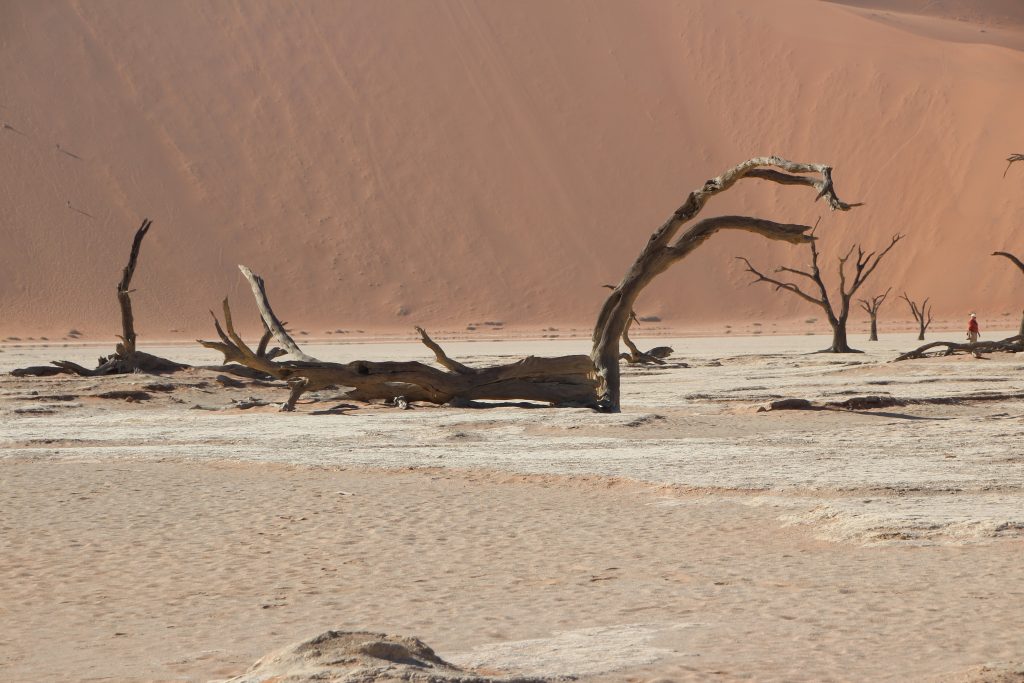
The desert is where most honeymoons here start and where the accommodation is strongest. Little Kulala and Kulala Desert Lodge sit on a private reserve with their own gate to the dunes, which means reaching Deadvlei before the public gate opens and avoiding the queue entirely.
Sossusvlei Desert Lodge sits in the NamibRand and is the design led option, with suites that have retractable skylights above the bed, private plunge pools and an on site astronomer. Wolwedans runs several camps in the same reserve, including a dune camp perched beside a 250 metre dune and exclusive use villas.
Three nights is right. One morning for Deadvlei and Big Daddy, one for a balloon flight, and one to do very little, which on a honeymoon is the point rather than a waste.
The lodges that matter here have between three and twenty rooms, and Little Ongava has three suites in total. Twelve months ahead is not excessive for peak season honeymoon dates. If a specific property is part of what you are imagining, book it before you book the flights.
Hot Air Balloon Safaris and Private Desert Dining
The balloon flight is the activity most honeymoon couples name afterwards. Flights lift off before dawn, drift over the dune sea for about an hour in complete silence, and finish with a champagne breakfast set up in the desert. Only one operator runs it with a small number of balloons, so it never feels crowded.
It is expensive and weather dependent, and flights get cancelled for wind at short notice. Book it for early in your stay rather than the last morning so there is room to reschedule.
Beyond that, most desert lodges arrange private dune dinners, sundowner drives to a ridge with nobody else on it, and couples spa treatments. Quad biking, e-bike rides and guided walks fill the gentler end. Helicopter and light aircraft flights over the sand sea are the alternative to ballooning and cover far more ground.
Nights 4 and 5: Damaraland or the Skeleton Coast
The middle of the trip is where Namibia offers something few honeymoon destinations can: genuine remoteness. Two nights somewhere with no other lodge for a hundred kilometres changes the character of a trip.
Damaraland camps around the Huab and Aba Huab riverbeds put you in desert adapted elephant country with red rock and rock art at Twyfelfontein. Desert Rhino Camp in the Palmwag Concession runs black rhino tracking on foot with Save the Rhino Trust, which is among the strongest wildlife experiences in Africa.
Further north, the concession camps of the Skeleton Coast and the Hoanib are reached only by light aircraft and sit among the most isolated lodges on the continent. Serra Cafema on the Kunene River, on the Angolan border, is the most remote of them and the one couples most often single out.
Nights 6 to 8: Private Reserve Safaris at Ongava or Onguma
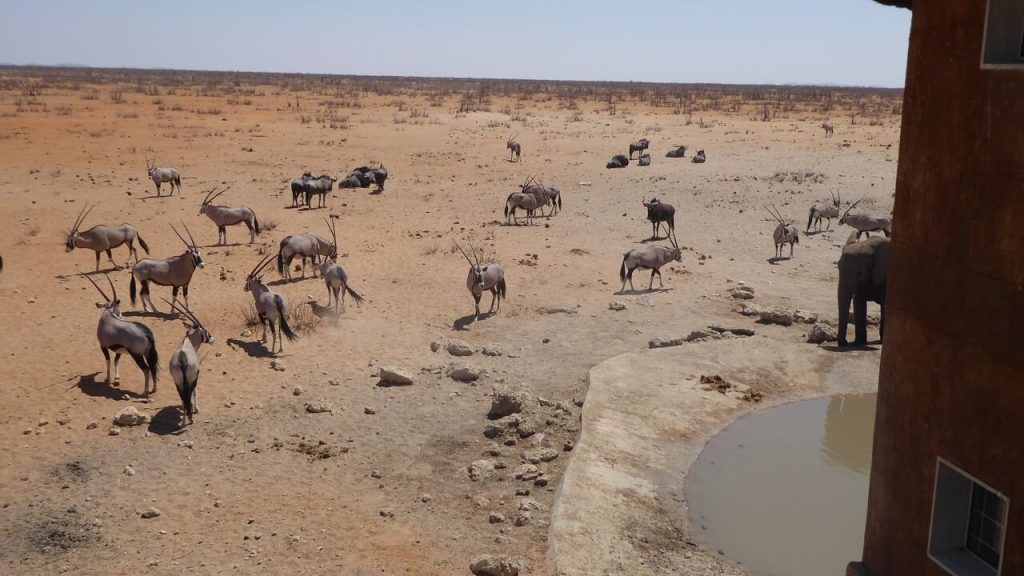
Finish with wildlife. The private reserves bordering Etosha give you guided game drives, night drives and walking that the national park does not permit, along with rooms considerably better than the park rest camps.
Ongava covers around 30,000 hectares on Etosha’s southern boundary and holds lion, both black and white rhino and high densities of plains game. Little Ongava, with three suites each having a private plunge pool overlooking a waterhole, is the flagship. Onguma on the eastern side runs a similar spread up to The Fort.
Both give access into Etosha itself for a day, so you get the waterhole game viewing without staying in a rest camp. Three nights allows one full day in the park and two on the private reserve.
Little Kulala. Sossusvlei, private gate to the dunes, rooftop star beds, plunge pools. The classic desert honeymoon property and the one that books out first.
Sossusvlei Desert Lodge. NamibRand, skylights above the bed, private pools, on site astronomer and a serious telescope. Design led rather than classic safari.
Serra Cafema. Kunene River on the Angolan border. Among the most remote lodges in Africa, reached by light aircraft only. For couples who want isolation above everything.
Little Ongava. Three suites on the Etosha boundary, each with a plunge pool over a waterhole. Private reserve game viewing plus access to the national park.
Star Beds, Dark Skies and Stargazing for Couples
The NamibRand holds International Dark Sky Reserve status, the only one on the African continent, and this is something Namibia offers that almost no honeymoon destination can match. There is almost no artificial light for a very long way and the air is exceptionally dry.
Several desert lodges have star beds or rooftop sleep outs, where the bed is wheeled onto an open deck and you sleep under the sky with nothing above you. Sossusvlei Desert Lodge takes it further with retractable skylights and an astronomer on staff.
Winter nights give the clearest air and are also cold enough that couples give up on a sleep out earlier than they intended, so ask what bedding is provided. New moon dates give the darkest skies, which is worth checking against your travel window if this matters to you.
A Self Drive Honeymoon Alternative
Not every honeymoon needs a light aircraft. A self drive version runs Windhoek, Sesriem, Swakopmund, Damaraland and Etosha over ten to twelve nights, staying in mid range and boutique lodges rather than the premium camps, at perhaps a quarter of the cost.
What you gain is the driving itself, which for couples who like road trips is a large part of the appeal, along with the freedom to change plans. What you lose is the seclusion, since mid range lodges are busier, and the guiding, which at the premium camps is genuinely excellent.
A middle option is self driving the route and booking one or two premium nights as a splurge, most commonly at Sossusvlei. That gives you one night of the honeymoon most people picture without the whole trip carrying that price.
Adding the Coast or Victoria Falls to a Namibia Honeymoon
Swakopmund suits couples who want a change of pace midway: seafood, a walkable town, and activities from skydiving down to a lagoon boardwalk. It is livelier and less secluded than the desert camps, which some couples want by the middle of a trip.
Victoria Falls is the common add on, reached by air from Windhoek, and pairs well because it delivers something Namibia does not. Cape Town works as a bookend on either side of the trip.
Botswana’s Okavango Delta is the other natural pairing, giving higher game density and water based activities alongside Namibian scenery. Both additions want a fortnight rather than ten days.
Best Time for a Namibia Honeymoon
May to October gives clear skies, comfortable days and the strongest wildlife, with July through September the peak for both game viewing and pricing. Desert nights in June and July drop close to freezing, which matters if a star bed is part of the plan.
April, May and September are the sweet spots: settled weather, fewer people, lower rates and comfortable evenings. The green season from November to April brings heat, dramatic skies and much lower prices, along with the small chance of seeing the Tsauchab flood the Sossusvlei pan, which almost nobody witnesses.
Balloon flights and light aircraft transfers are weather dependent in any month, so build a spare day into a short trip.
Entry Requirements and Getting There
International flights land at Hosea Kutako International Airport outside Windhoek, with common routings through Johannesburg, Frankfurt and Addis Ababa. Fly in itineraries usually start with a light aircraft transfer from there the same day or the following morning.
Entry rules changed recently and much published advice is out of date. Namibia withdrew visa free entry for many European, North American and Australasian passports, so travellers from those countries now need a visa on arrival or a holiday visa arranged online in advance, with six months of passport validity and three blank pages.
One practical detail catches newly married couples out: if your passport is in your maiden name and your booking is in your married name, they will not match. Travel in the name on the passport and change it afterwards.
Namibia Honeymoon Questions
What does a Namibia honeymoon cost?
A fly in honeymoon using premium camps runs from roughly 800 to 2,500 US dollars per person per night all inclusive, with a seven night circuit commonly quoted from around 6,500 US dollars per person and rising well past 10,000 for the top properties. Light aircraft transfers are often quoted separately at several thousand Namibian dollars per leg, so confirm whether they are included. A self drive honeymoon staying in boutique and mid range lodges lands closer to 400 to 600 US dollars a day for two.
How long should a Namibia honeymoon be?
Eight to ten nights covers the desert, a remote camp and a private reserve at a pace that feels restful rather than rushed. Seven works for a fly in trip with three stops. Anything under a week means one region only, which for a honeymoon is a reasonable choice if that region is Sossusvlei. Adding Victoria Falls or Botswana wants a fortnight.
When should we book a Namibia honeymoon?
Nine to twelve months ahead for peak season, and earlier if a specific property is central to the plan. The lodges that define a Namibian honeymoon are very small, with Little Ongava having three suites and several desert camps under a dozen rooms, so they sell out long before the country does. Book the lodges before the flights rather than the other way round.
Is a fly in honeymoon worth the cost?
It depends what you want from the days. Flying removes four long driving days, reaches concession areas no self drive route can access, and delivers aerial views over the dune sea that are worth something on their own. What it costs beyond money is the ground level sense of scale, which is a real part of Namibia. Couples who enjoy driving together often prefer the road trip and spend the difference on one or two premium nights.
Is Namibia romantic enough for a honeymoon?
It offers a specific kind of romance rather than the tropical version: silence, enormous space, some of the darkest night skies on earth, and lodges where you may be one of six guests. There are no beaches worth swimming from, since the Atlantic here is cold and rough. Couples wanting sun loungers and warm sea should pair Namibia with Zanzibar or Mauritius rather than expecting it here.
Can we sleep under the stars?
Yes, and it is one of the country’s signature honeymoon experiences. Several desert lodges have star beds or rooftop sleep outs where the bed moves onto an open deck. The NamibRand is the only International Dark Sky Reserve in Africa, so the skies are exceptional. Winter nights get genuinely cold, so ask what bedding is provided, and check new moon dates if darkness matters to you.
What about a hot air balloon flight?
It runs at sunrise over the dune sea, lasts about an hour and finishes with a champagne breakfast in the desert. Only one operator flies here with a handful of balloons, so it stays uncrowded. It is expensive and cancelled regularly for wind, so book it early in your desert stay rather than on the final morning, which leaves room to reschedule.
Booking Your Namibia Trip
The safari companies and tour operators listed on this website put trips like this together for a living and know which camps, guides and routes actually deliver. We are an independent guide to Namibia; we do not book or sell tours ourselves.
When you are ready, arrange your safari, tour or holiday with one of the recognised operators listed here. Tell them your dates and what matters most, and a real person, not a form, will handle the itinerary, park bookings and logistics for you.