Etosha Self-Drive Guide
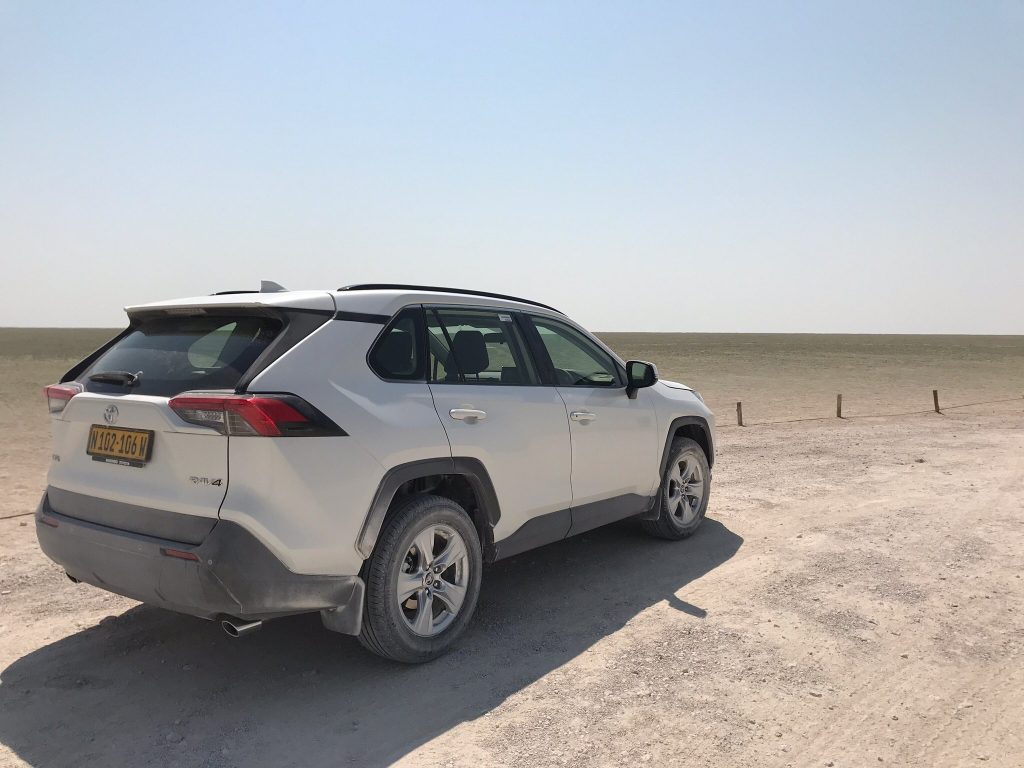
Etosha is built for self driving and the arithmetic catches people out. The speed limit is 60 kilometres an hour and you should not expect to cover more than 25 in an hour once you stop for animals. Gates open at sunrise and close at sunset, and you must be at your camp before closing. Park fees rose to N$280 per international adult per day.
The Fees
This is where published figures conflict badly, so the position is worth setting out.
The current fee for international adults is N$280 per person per day, made up of N$140 entrance and N$140 conservation, plus N$60 per vehicle for up to ten seats. These rates took effect on 1 April 2026 under the Ministry schedule.
SADC adults pay N$180 per day and Namibian adults N$60. Children aged eight to under sixteen pay N$180 international or N$100 SADC, and children under eight are free for all nationalities.
A good deal of published material still quotes N$150 per adult and N$50 per vehicle, which are the previous rates. Budget for the higher figure.
Fees are paid on entry and are valid for 24 hours from the time of entry, so you can come and go within that window.
Cash in Namibian dollars and card payments are both accepted. Note that some accounts describe paying at the nearest camp rather than the gate itself, so allow time either way.
Bring photo identification. Every visitor must show a passport, driving licence or ID on entry, a measure introduced because of poaching.
Plan on 25 kilometres an hour, not 60. The speed limit is 60 and the useful figure is a quarter of that, because you will stop constantly. Okaukuejo to Namutoni is over 100 kilometres of internal road, which is most of a day rather than a transfer. Itineraries that treat moving between camps as a two hour drive produce people racing to beat the gate at sunset.
The Four Gates
Your gate choice and your camp choice go together, since each camp sits closest to a different entrance.
Andersson Gate in the south is the busiest, reached on the C38 via Outjo, and leads directly to Okaukuejo. This is the main access from Windhoek and the stretch from the gate to Okaukuejo is the only tarred road inside the park.
Von Lindequist Gate in the east connects to the B1 near Tsumeb and sits around eight kilometres from Namutoni. It gives access to the eastern waterholes including Chudop, Klein Namutoni and Goas.
Galton Gate in the remote west, near Kamanjab, serves Dolomite Camp and Olifantsrus. Some sources describe it as accessible only to guests staying at those camps.
King Nehale Lya Mpingana Gate in the north is the newest, sitting 48 kilometres from the main road to Ondangwa and about 130 kilometres from Ondangwa itself.
Pick the gate nearest your first camp rather than the one nearest where you are coming from.
Gate Times
The timing rules are strict and they shape every day inside the park.
Gates open at sunrise and close at sunset, which means roughly 06:00 to 07:30 for opening and 17:30 to 19:30 for closing depending on the month. Times change weekly.
You must be at your camp before gate closing time. Self driving after dark inside Etosha is prohibited entirely.
Check the current times at your camp reception rather than relying on a published figure, since they shift through the year.
Allow for the drive from the entrance gate to your camp when planning arrival, since being through the gate is not the same as being at the camp.
The practical consequence is that afternoon game viewing has a hard stop, and the last hour before closing is one of the two productive windows, so plan to be near your camp for it.
The Rules Inside
These are enforced and several exist for reasons worth knowing.
Stay on the road network at all times. Off road driving is strictly prohibited.
Do not get out of your vehicle except at designated points with fencing. This is not advisory.
Speed limit is 60 kilometres an hour, with some sources giving 60 on tar and 40 on gravel. It is strictly enforced.
No feeding, approaching or crowding wildlife.
Only the southern rim of the Etosha Pan is open to visitors and there are no roads crossing the pan itself, which surprises people who expect to drive onto it.
Driving at night is prohibited, which is why the floodlit waterholes at the rest camps are the only night viewing available and why staying inside the park matters.
Roads and Vehicles
Etosha is one of the easier African parks to self drive and the roads still require attention.
The main tourist roads are well graded gravel, with the only tarred stretch running from Andersson Gate to Okaukuejo.
Gravel conditions range from surprisingly smooth to badly potholed, so care is needed particularly for drivers not used to gravel.
A two wheel drive sedan is adequate in the dry season on the main routes. A high clearance vehicle is more comfortable and is recommended year round, and a 4×4 helps for the western Dolomite section and after rain.
Fuel is available at the main rest camps, and Olifantsrus has none, which is worth knowing before heading into the western section.
Reserve self drive vehicles three or more months ahead for the May to October dry season. April and November often have last minute availability.

How to Actually Drive It
The technique here differs from most parks and it is the difference between a good day and a frustrating one.
Etosha has no perennial rivers, so in the dry season every animal must come to a small number of springs and boreholes. The productive method is to park at a waterhole, switch off the engine and wait rather than driving between sightings.
Position the vehicle with the sun behind you and leave the animals’ route to the water clear.
Sitting for an hour at a good waterhole beats covering fifty kilometres. This is the single most common mistake visitors make, and travellers on their third week in Namibia do it better than those on their first day.
Ask at reception which waterholes have been producing that week. Staff know, the pattern changes, and almost nobody asks.
Early morning from gate opening and the last hours before closing are the productive windows. The middle of the day is poor for movement and better than its reputation at waterholes, since elephants come through in the heat.
Suggested Routes
Three days. Andersson Gate to Okaukuejo, a predator loop day, then transit to Halali and out through Von Lindequist. Covers the southern and central circuits.
Five days. The same with two nights at each camp, adding the pan edge and time to sit rather than move. The better version.
West to east. Galton Gate for Dolomite and Olifantsrus, through to Okaukuejo and Namutoni. The quietest section and the least visited.
Two camps minimum. Splitting nights between camps beats basing in one, since it puts you at different waterholes at dawn.
Getting There
Distances to the gates are substantial and worth planning honestly.
Windhoek to Andersson Gate is around 430 kilometres via Otjiwarongo and Outjo. Windhoek to Von Lindequist via Otjiwarongo and Tsumeb is about six hours.
Swakopmund to Andersson Gate is around 520 kilometres and roughly seven hours, which is a long day. Breaking it at Kamanjab or in Damaraland is worth doing.
Palmwag to Galton Gate is about 181 kilometres. Palmwag to Andersson is around 290 kilometres and roughly five hours.
Ondangwa to King Nehale Gate is about 130 kilometres, roughly an hour and a half.
Charter flights land at the eastern airstrip near Von Lindequist and at private strips near Andersson.
Where to Stay Inside
Accommodation inside the park is booked direct with Namibia Wildlife Resorts and is worth the effort.
Okaukuejo, Halali and Namutoni each have a floodlit waterhole just inside the fence, lit all night and watched on foot from a platform. Okaukuejo’s produces black rhino most nights.
That night viewing is available only to guests staying inside, and campers get identical access to chalet guests at a fraction of the price.
Dolomite Camp serves the western section and Olifantsrus is camping only, remote, with a hide that is excellent for elephants and no fuel.
Onkoshi sits on the pan edge in the east.
Book six months ahead for peak season. Private lodges on the boundary accept direct bookings and offer night drives and walking that the park does not permit.
Etosha Self-Drive Questions
What are the park fees?
N$280 per international adult per day, made up of N$140 entrance and N$140 conservation, plus N$60 per vehicle up to ten seats, effective 1 April 2026. SADC adults pay N$180 and children eight to under sixteen pay N$180 international. Under eights are free. Much published material still quotes N$150 and N$50, which are the previous rates, so budget for the higher figure.
Which gate should I use?
The one nearest your first camp rather than the one nearest where you are coming from. Andersson in the south for Okaukuejo, Von Lindequist in the east for Namutoni, Galton in the west for Dolomite and Olifantsrus, King Nehale in the north. Your gate choice and camp choice go together, since each camp sits closest to a different entrance.
How fast can I drive?
The limit is 60 kilometres an hour, strictly enforced, with some sources giving 60 on tar and 40 on gravel. The useful planning figure is 25 an hour, since you will stop constantly for animals. Okaukuejo to Namutoni is over 100 kilometres of internal road, which is most of a day rather than a transfer.
Do I need a 4×4?
Not in the dry season on the main routes, where a two wheel drive sedan is adequate and the Andersson to Okaukuejo stretch is tarred. A high clearance vehicle is more comfortable and recommended year round, and a 4×4 helps for the western Dolomite section and after rain. Gravel conditions range from smooth to badly potholed.
Can I drive at night?
No. Self driving after dark inside Etosha is prohibited entirely, and you must be at your camp before gate closing, which falls between roughly 17:30 and 19:30 depending on the month. That restriction is why the floodlit waterholes at the rest camps are the only night viewing available and why staying inside the park matters.
What is the best way to see wildlife?
Park at a waterhole, switch off and wait. Etosha has no perennial rivers, so in the dry season every animal must come to a handful of springs and boreholes. Sitting for an hour beats covering fifty kilometres, and this is the most common mistake visitors make. Ask at reception which waterholes have been producing that week.
Do I need identification?
Yes. Every visitor must show photo identification on entry, either a passport, driving licence or ID, a measure introduced because of poaching incidents. Bring it accessible rather than buried in luggage. Fees are paid on entry, valid for 24 hours, with cash in Namibian dollars and cards both accepted.
Booking Your Namibia Trip
The safari companies and tour operators listed on this website put trips like this together for a living and know which camps, guides and routes actually deliver. We are an independent guide to Namibia; we do not book or sell tours ourselves.
When you are ready, arrange your safari, tour or holiday with one of the recognised operators listed here. Tell them your dates and what matters most, and a real person, not a form, will handle the itinerary, park bookings and logistics for you.