Namibia Family Safari Itinerary
A Namibia family safari itinerary works better than most African options because over 80 percent of the country carries little to no malaria risk and self driving lets you set the pace around children rather than a group schedule. The ten night route below runs Windhoek, Sossusvlei, Swakopmund, Etosha and Okonjima. Lodge minimum ages are the main constraint to plan around.
Why Namibia Works for a Family Safari
Three things make this country unusually manageable with children. The malaria position is the first: the desert, the coast, the south and the central highlands carry little to no risk year round, and Etosha itself is considered low risk during the winter months. That removes the medication question that shapes family planning in most safari destinations.
The second is self driving. You stop when a child needs to stop, turn back when attention runs out, and eat when they are hungry rather than when a group vehicle returns. Namibia is one of the few African countries where driving yourself around a major game park is straightforward.
The third is variety. Children who tire of game drives get sandboarding, quad biking and a seal colony on the coast, and dunes they are allowed to run down. A trip here is more than sitting in a vehicle looking for animals, which matters more with children than adults tend to remember.
Days 1 to 3: Windhoek to the Sossusvlei Dunes with Children
Collect the vehicle at the airport and take the first day gently. Windhoek at 1,700 metres after a long flight is enough for most families, and a supermarket stop matters more than sightseeing.
Day two is the drive southwest to Sesriem, roughly five hours with a stop at Solitaire. Break it rather than pushing through, and pick accommodation with a pool, which on this route is worth more than any other feature.
Day three is the dune morning. Start before dawn, do Deadvlei while the light works, and let children climb Dune 45 rather than attempting Big Daddy, which is too much for young legs in rising heat. Rolling down a dune face keeps most children happy far longer than the walk up. Be back at the pool by late morning, because there is no shade out there and the afternoon heat is genuinely punishing.
Book accommodation with a swimming pool at every desert and Etosha stop. It sounds trivial and it is the single thing that makes a Namibian family trip work, because it turns the unusable middle of the day into the part children look forward to.
Days 4 to 6: Swakopmund Adventure Activities for Families
The drive to the coast takes five to six and a half hours over the Gaub and Kuiseb passes, which is a long day with children and worth starting early. The temperature drops sharply as you reach the Atlantic, so have jackets accessible rather than buried.
Three nights here is the rest point of the trip and the reason it works. Swakopmund has the activities: sandboarding on the dune belt, quad biking, and for teenagers, tandem skydiving. Living desert tours find chameleons, geckos and sidewinding adders in the sand, and children usually rate these above any game drive.
Walvis Bay is half an hour south, with a catamaran cruise where seals climb aboard and pelicans land on the deck. That trip converts children who were sceptical about wildlife. The lagoon boardwalk with its flamingos costs nothing and works for all ages.
Days 7 to 9: Etosha Safari and the Floodlit Waterholes
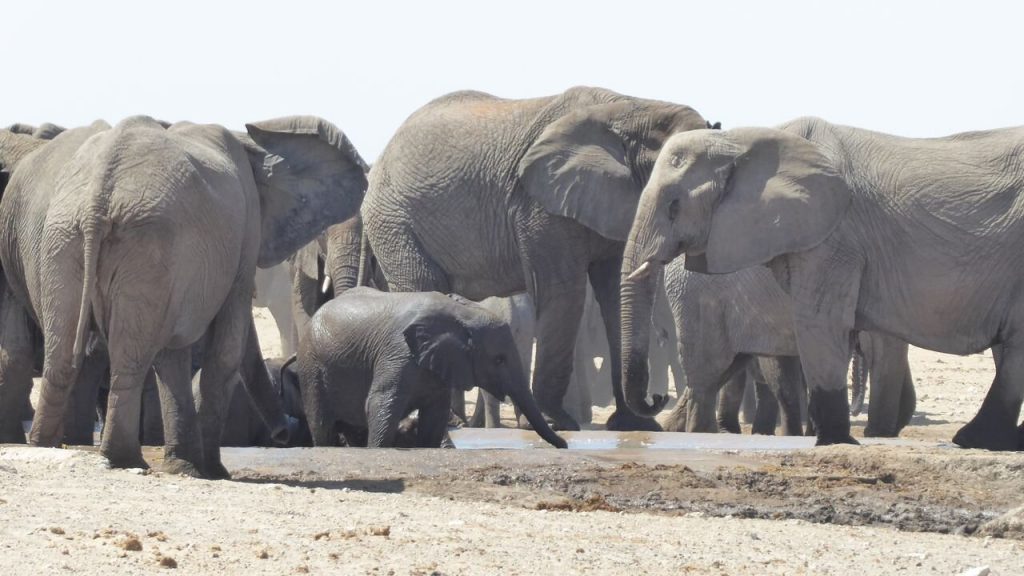
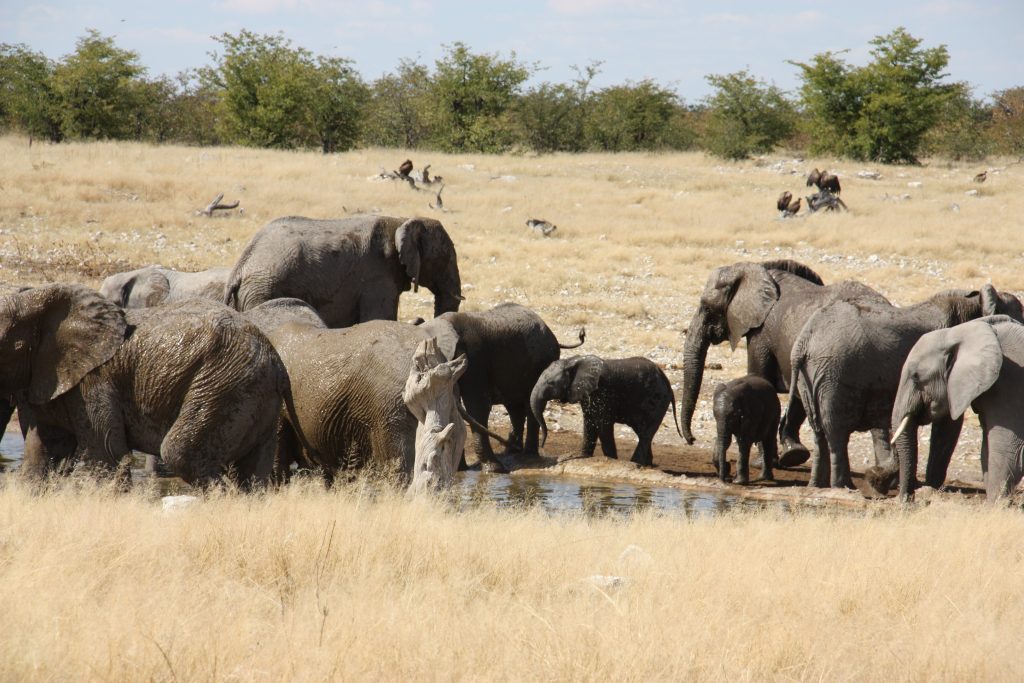
Etosha is the wildlife section and the floodlit waterholes are why it suits families. Okaukuejo, Halali and Namutoni each have one just inside the fence, lit all night and viewable on foot from a low wall. Children who will not sit through a four hour game drive will happily watch a black rhino drink for an hour after dinner.
Self driving during the day means you control the pace entirely. Park at a waterhole, switch off and wait, which is how Etosha works anyway. Nebrownii and Okaukuejo waterholes are close to camp and good for shorter outings with young children.
Three nights lets you split between two camps and cut the driving. The camps are fenced with pools, restaurants and shops, which removes most of the logistical difficulty of travelling with children in a game park. Bring warm layers for the waterhole evenings, since it drops to single figures after dark in winter.
Day 10: Big Cat Tracking at Okonjima
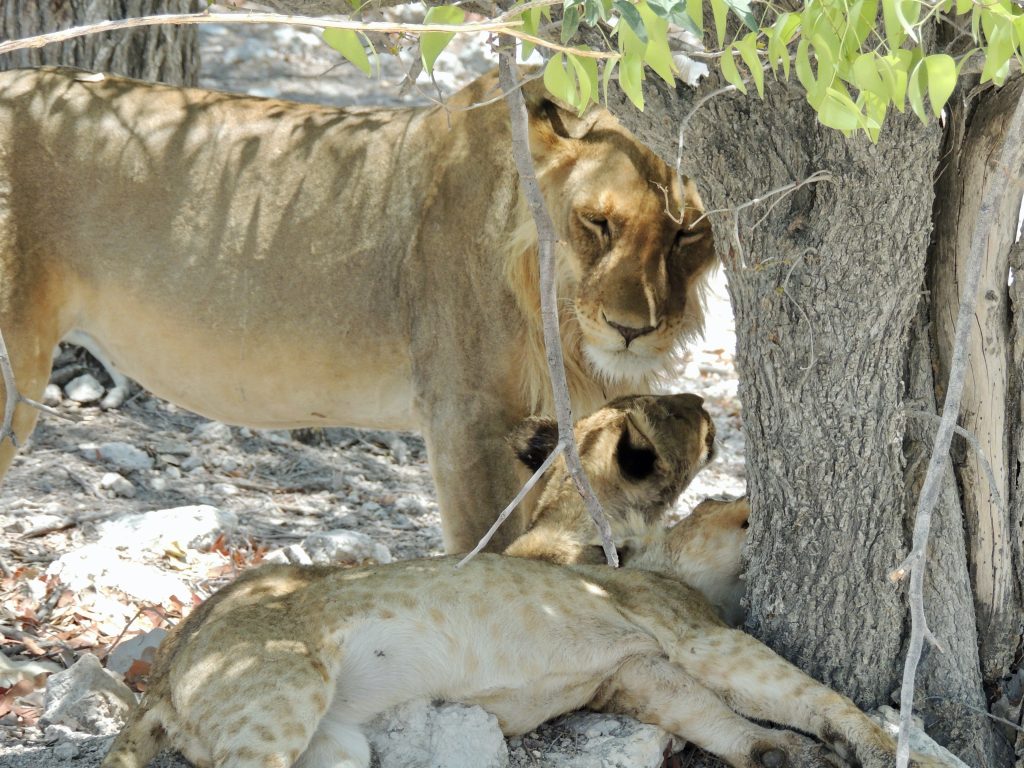
Break the drive back to Windhoek at Okonjima, roughly halfway, home of the AfriCat Foundation. Leopard and cheetah tracking with collared animals gives a near certain sighting, which after a park where nothing is guaranteed is a good way for children to finish.
The foundation began as a rescue operation for cats taken off farmland and the education side is pitched well for older children. There is a night hide for nocturnal animals.
From Okonjima it is about three hours to Windhoek, so a final night here removes the pressure of an airport dash on the last morning.
Lodge Minimum Ages and Family Room Options
This is the constraint that catches families out at the booking stage. Premium camps commonly set minimum ages of six or eight, several require families with children under about twelve to book a private vehicle at extra cost, and walking activities usually carry a higher minimum again, often thirteen.
The government rest camps inside Etosha and at Sesriem have no such restrictions and take families of any age, which is one more argument for booking inside the parks. Mid range lodges and guest farms are similarly relaxed and often have family rooms.
Among the premium properties, some are explicitly family friendly: Kulala Desert Lodge at Sossusvlei takes children of all ages, has a family suite, and lets up to two children under five stay free sharing with parents, with reduced rates for five to twelve year olds. Check the specific policy of every property before booking rather than assuming.
Under fives. Park rest camps, guest farms and mid range lodges. Short drives, pools, floodlit waterholes. Avoid premium camps with age limits and long transfer days.
Six to twelve. Most lodges open up. Dune climbing, living desert tours, sandboarding, seal cruises. Some camps require a private vehicle at this age.
Teenagers. Everything is available. Skydiving, quad biking, Big Daddy, walking activities and rhino tracking on foot where the minimum age allows.
Multi generational. Guest farms and family suites work best, with a pool, short daily drives and one base used for several nights rather than constant moves.

Malaria Risk and Health Planning for Children
Most of a standard family route is low risk. Sossusvlei, Swakopmund, Walvis Bay, the south and the central highlands are considered malaria free year round. Etosha sits in a low risk zone that some doctors treat differently by season, with the winter months from around July to September regarded as the lowest.
Risk concentrates in the north and northeast, particularly the Zambezi Region and along the Kavango rivers, and rises during and after the rains. A family itinerary that stays west and south avoids the question almost entirely.
Take the specific route and dates to a travel clinic rather than making a blanket decision. Separately, the everyday health issues here are sun and dehydration rather than anything exotic: high factor sunscreen, hats, and far more water than you think children need.
Pacing a Family Road Trip in Namibia
The commonest mistake is treating a family trip as an adult itinerary with children added. Distances that are tolerable for two adults become difficult with a six year old in the back.
Keep driving days under about four hours where possible and never schedule two long ones consecutively. Build in at least two places where you stay three nights rather than moving. Start early and use the middle of the day for pools and rest, which is what the heat dictates anyway.
Ten nights covering four destinations is about right. The same trip compressed into seven becomes a driving marathon, and adding Damaraland or the south to a family itinerary is usually a mistake unless you have a fortnight.
What to Skip on a Family Safari
Some of Namibia’s best experiences are poor with children and it saves disappointment to say so. Big Daddy at Sossusvlei is one to two hours of climbing in soft sand with no shade and no water, which is beyond most under twelves.
Fish River Canyon and Lüderitz involve very long driving days for attractions that are largely scenic, and the canyon rim is an unfenced drop. The Skeleton Coast southern section is a long, austere drive that children find repetitive.
Rhino tracking on foot in Damaraland carries minimum ages and involves several hours of walking on rocky ground. Kaokoland is remote enough that self sufficiency requirements outweigh the reward for most families.
Best Time for a Namibia Family Safari
May to October is the dry season and the strongest window, with the added benefit that Etosha’s malaria risk is considered lowest in the winter months. Days are comfortable and wildlife concentrates at waterholes, which suits shorter game viewing sessions.
The catch is cold. June and July nights drop close to freezing in the desert and at Etosha, and the floodlit waterhole evenings are outdoors. Pack properly for that.
December and January bring interior temperatures above 40 degrees, which is hard on children, though the coast stays mild and is where Namibian families themselves holiday. School holiday timing usually decides this rather than any of the above, and the country works in every month with the right adjustments.
Entry Requirements for Families
Entry rules changed recently and much published advice is out of date. Namibia withdrew visa free entry for many European, North American and Australasian passports, so travellers from those countries now need a visa on arrival or a holiday visa arranged online beforehand. Children under six are commonly exempt from the fee, though every family member needs the correct documentation.
Passports need six months of validity and three blank pages. Namibia has historically required documentation proving parentage for children, including unabridged birth certificates and consent letters where one parent travels alone, so check the current position well before departure since this catches families out at check in rather than at the border.
Namibia Family Safari Questions
What does a Namibia family safari cost?
Self driving with mid range lodges, a family of four can expect roughly 500 to 700 US dollars a day covering vehicle, fuel, accommodation, park fees and food, so around 5,000 to 7,000 for ten nights. Camping with a four person rooftop tent rig brings that down considerably. Park fees were revised upward recently to roughly 200 to 280 Namibian dollars per international adult per day, with younger children entering free, and the visa runs about 1,600 Namibian dollars per adult with under sixes commonly exempt.
What age is best for a Namibia family safari?
Six and above opens up most lodges and activities, and eight to fourteen is probably the sweet spot: old enough for dune climbing, sandboarding and long enough attention for waterhole watching, young enough to find all of it exciting. Under fives work too, since much of the country is malaria free and self driving gives flexibility, but you are restricted to rest camps and family friendly lodges rather than the premium camps.
Is Namibia malaria free for children?
Much of it is. The desert, coast, south and central highlands carry little to no risk year round, and Etosha sits in a low risk zone considered lowest during the winter months. Real risk concentrates in the Zambezi Region and along the northern rivers, particularly during and after the rains, and a standard family route avoids those entirely. Discuss your specific dates and route with a travel clinic rather than relying on a general rule.
Can children go on game drives in Etosha?
Yes, and self driving means no minimum age applies at all inside the park. You set the pace, turn back when attention fails, and stop whenever needed. Guided drives run by the rest camps and private lodges often do set minimums, commonly six, and some premium properties require families with younger children to book a private vehicle. The floodlit waterholes at the rest camps have no age restriction and are usually the highlight for children.
How long should a family trip to Namibia be?
Ten to twelve nights covering four destinations. That allows three night stays at the coast and Etosha rather than moving every morning, which is what makes the difference with children. Seven nights is possible but turns into a driving trip. Fourteen lets you add Damaraland at a gentle pace, though the south is still a stretch for most families.
Should we self drive or book a guided family trip?
Self driving suits most families because the flexibility matters more than the guiding. You control every stop, meal and turnaround, which is hard to overstate with young children. Guided private trips with a driver work well for families who would rather not manage gravel roads and long distances, and remove the navigation entirely. Group tours are the poorest fit, since the schedule belongs to everyone else.
What should we pack for children?
Warm layers are the thing families underestimate, since desert and Etosha nights drop close to freezing between May and August and waterhole watching happens outdoors. Beyond that, high factor sunscreen, wide brimmed hats, closed shoes for dune sand, plenty of water bottles, binoculars for each child rather than one shared pair, and entertainment for the long driving legs.
Booking Your Namibia Trip
The safari companies and tour operators listed on this website put trips like this together for a living and know which camps, guides and routes actually deliver. We are an independent guide to Namibia; we do not book or sell tours ourselves.
When you are ready, arrange your safari, tour or holiday with one of the recognised operators listed here. Tell them your dates and what matters most, and a real person, not a form, will handle the itinerary, park bookings and logistics for you.