Budget Travel in Namibia
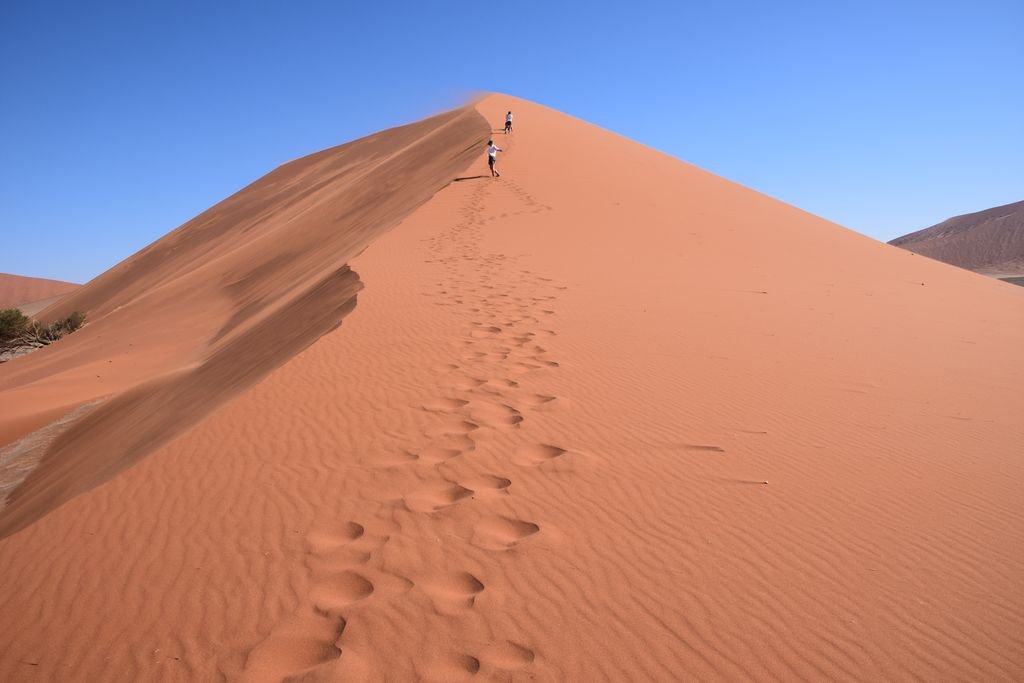
Two people can travel Namibia properly on 200 to 300 US dollars a day between them, covering vehicle, fuel, campsites, park fees and food. The country rewards budget travel more than most African destinations because the best experiences are position dependent rather than price dependent. A camper at Etosha gets the identical floodlit waterhole as a lodge guest.
Why Namibia Suits Budget Travel
The reason is structural rather than a matter of finding deals.
Namibia’s headline attractions are national parks, dunes, canyons, rock art and a coastline, all of which are accessible with a park permit rather than a premium booking. Nothing about Sossusvlei at sunrise is improved by having paid more.
The country is self drivable, which removes the guided vehicle cost that dominates budgets in East Africa and Botswana.
Camping infrastructure is excellent and extensive, with well run sites almost everywhere at a fraction of lodge rates.
And the decisive advantages are frequently free or cheap. Etosha’s floodlit waterholes are available to campers at rest camp rates. Walvis Bay lagoon needs no fee at all. Sesriem Campsite delivers the same early gate access as the lodges.
Spend money on position rather than comfort. Sesriem Campsite at around N$670 per person buys the exact gate access that a lodge inside the park charges many times more for, and a rest camp pitch at Okaukuejo buys the same floodlit waterhole as a chalet. In Namibia, where you sleep matters more than what you sleep in, and budget travellers can buy the part that counts.
The Daily Budget
Working figures for a two week trip, for two people sharing.
Camping and self catering runs roughly 200 to 300 US dollars a day for two, covering vehicle rental, fuel, campsites, park fees and food. That is the cheapest way to see the country properly.
Adding some guest farms and occasional restaurant meals pushes it towards 350.
Mid range self drive with lodges runs around 400 to 450 a day for two, which is a different trip rather than a slightly dearer one.
Solo travellers face a real penalty, since accommodation is priced per room and vehicle costs do not halve. Camping is the answer, as campsites are frequently priced per person.
Backpackers using buses and organised tours from towns can go lower again, with the itinerary constrained accordingly.
Where the Money Goes
Knowing the split helps you cut the right things.
Vehicle rental and fuel together are usually the largest line on a self drive trip, frequently exceeding accommodation. Namibian distances are long and gravel driving is thirsty.
Park fees add up across a multi park itinerary, at roughly N$200 to N$280 per international adult per day plus around N$60 for the vehicle.
The visa is now N$1,600 per adult, roughly 90 US dollars, following the 2025 change, with under sixes exempt.
Campsites run from a few hundred Namibian dollars per site at community sites to more at the park camps.
Food is cheap if bought at supermarkets in the larger towns and expensive if bought on the road, where filling stations sell little beyond biltong and cold drinks.
Activities are the discretionary line: living desert tours, Sandwich Harbour trips and boat cruises are moderate, while ballooning at around N$10,000 per person is not.
Cutting Costs Without Cutting the Trip
Several savings cost you nothing in experience.
Camp rather than lodge, using park rest camps where position matters and community or private sites elsewhere. The best campsites in the country, including Spitzkoppe, cost almost nothing.
Self cater. Stock up at supermarkets in Windhoek, Swakopmund, Otjiwarongo, Tsumeb and Grootfontein, which are well stocked and far cheaper than anything on the road. Every campsite has a braai.
Take a two wheel drive if your route allows. The main circuit works in the dry season without a 4×4, at lower rental and fuel cost.
Travel in the green season from November to April, when rates fall and availability improves, accepting heat and dispersed wildlife in exchange.
Travel in April, May, September or October rather than July and August, which are peak.
Book direct with Namibian operators rather than international platforms, which add margin.

Where Not to Economise
Some savings cost more than they save and this is worth being direct about.
Insurance is the first. Basic rental cover frequently excludes single vehicle accidents, meaning rolling on gravel or swerving to avoid a kudu, which is exactly how Namibian accidents happen. Standard excess is commonly N$40,000. Tyre and glass cover at around N$260 a day pays for itself on the first puncture, and a heavy duty 4×4 tyre costs over N$3,000.
The second spare tyre at around N$120 a day is worth taking on gravel routes.
Water and fuel. Filling at every opportunity rather than calculating whether you will make it is not an expense worth trimming.
Guided activities where the guide is the product. The living desert tour from Swakopmund finds animals you would walk past for a week, and rhino tracking cannot be done independently at all.
Position at Sesriem and Etosha, as above, is where budget travellers should be spending rather than saving.
The Free and Nearly Free
A useful amount of Namibia costs little or nothing.
Walvis Bay lagoon has a paved boardwalk running several kilometres with flamingos feeding within metres, no fee, no booking, no guide. It is among the best wildlife watching in the country.
The Garub hide for the wild horses west of Aus is free and open, reached on a short signposted track off the B4.
Etosha’s floodlit waterholes are included with any accommodation inside the park, including camping.
Spitzkoppe’s community campsite is inexpensive and among the best campsites in Africa, with granite boulders, the rock arch and no light pollution.
Swakopmund’s jetty, beach and German architecture cost nothing, and the Windhoek Craft Centre and Katutura markets need only what you spend.
Sesriem Canyon is covered by the same park fee as the dunes and takes forty minutes.
Backpacking and Public Transport
Travelling without a vehicle is possible and it constrains the itinerary considerably.
Intercity buses and shared combis connect Windhoek with Swakopmund, the northern towns, Rundu and Katima Mulilo. Hostels and backpacker lodges operate in Windhoek and Swakopmund.
What public transport does not reach is Etosha’s waterholes, Sossusvlei, Damaraland, the Skeleton Coast or the Fish River Canyon rim. The country’s attractions are dispersed across enormous distances with no network serving them.
The workable method is buses between towns plus organised day tours or short safaris from the towns you reach. Swakopmund in particular has a dense activity market accessible without a car.
Shared self drive is the other option: joining other travellers to split a rental vehicle, which hostels in Windhoek and Swakopmund often facilitate.
Small group overland tours remove the vehicle problem entirely at a fixed known cost, and are worth pricing against a shared rental.
Eating Cheaply
Food is one of the easier budget lines to control in Namibia and the difference between doing it well and badly is substantial.
Supermarkets in Windhoek, Swakopmund, Otjiwarongo, Tsumeb, Grootfontein and Keetmanshoop are properly stocked and priced for residents rather than visitors. Stock up in these before every long leg.
Between towns there is often nothing. Filling stations sell biltong, crisps and cold drinks, and padstal farm stalls appear on some routes and are worth stopping at.
Every campsite in Namibia has a braai place because it is assumed you will use it, and firewood is sold cheaply at filling stations, farm stalls and campsites throughout the country.
Game meat is inexpensive by international standards, since much of it comes from Namibian game farms rather than imports, so a restaurant meal of oryx or kudu costs less than the equivalent beef would at home.
Kapana at Single Quarters market in Katutura, Windhoek, is beef grilled over coals and sold by weight, costs very little and is the most interesting hour of food in the capital.
Tap water in Namibian towns is treated and safe, which removes the bottled water line entirely. In rural areas and remote parks it should be boiled or treated.
A Budget Two Week Route
Days 1 to 4. Windhoek to Sesriem, camping inside the gate. Dune 45, Deadvlei, Sesriem Canyon. The gate access is the splurge and it is cheap.
Days 5 to 8. Swakopmund and Walvis Bay. Free lagoon boardwalk, one paid living desert tour, self catering, hostel or campsite.
Days 9 to 12. Etosha rest camp camping. Floodlit waterholes included, self catering, three or four nights across two camps.
Days 13 to 14. Spitzkoppe or the Erongo on the way back to Windhoek. Community campsite, granite, dark skies, almost free.
Budget Travel Questions
How much does a budget Namibia trip cost?
Two people camping and self catering can travel on roughly 200 to 300 US dollars a day between them, covering vehicle rental, fuel, campsites, park fees and food. Adding guest farms and occasional restaurant meals pushes it towards 350. Mid range self drive with lodges runs around 400 to 450 a day for two, which is a different trip rather than a slightly dearer one.
Can I see Namibia properly on a budget?
Yes, more so than most African destinations, because the best experiences are position dependent rather than price dependent. Etosha’s floodlit waterholes come with any accommodation inside the park including camping. Sesriem Campsite at around N$670 per person buys the same early gate access as the lodges. Nothing about Sossusvlei at sunrise is improved by having paid more.
What is the biggest cost?
Vehicle rental and fuel together, which on a self drive trip frequently exceed accommodation because Namibian distances are long and gravel driving is thirsty. Park fees add up at roughly N$200 to N$280 per international adult per day plus around N$60 per vehicle. The visa is now N$1,600 per adult following the 2025 change, with under sixes exempt.
Where should I not economise?
Insurance. Basic rental cover frequently excludes single vehicle accidents, meaning rolling on gravel or hitting a kudu, which is how Namibian accidents happen, and standard excess is commonly N$40,000. Tyre and glass cover at around N$260 a day pays for itself on the first puncture. Also do not trim water, fuel or guided activities where the guide is the product.
Do I need a 4×4?
Not for the main circuit in the dry season, where a two wheel drive handles Windhoek, Sesriem, Swakopmund, Damaraland’s main roads and Etosha at lower rental and fuel cost. A 4×4 is needed for the last five kilometres to the Sossusvlei pans, where a shuttle runs from the 2WD car park at around N$180 per person return, and for Kaokoland and Khaudum.
Can I travel Namibia without a car?
Between towns, yes, using intercity buses and shared combis with hostels in Windhoek and Swakopmund. What public transport does not reach is Etosha’s waterholes, Sossusvlei, Damaraland or the Skeleton Coast. The workable method is buses plus organised day tours from the towns you reach, or sharing a rental with other travellers, which hostels often help arrange.
What is free in Namibia?
More than you would expect. The Walvis Bay lagoon boardwalk, several kilometres with flamingos feeding within metres, no fee or booking. The Garub hide for the wild horses west of Aus. Etosha’s floodlit waterholes with any accommodation inside the park. Swakopmund’s jetty, beach and architecture. Sesriem Canyon is covered by the same park fee as the dunes.
Booking Your Namibia Trip
The safari companies and tour operators listed on this website put trips like this together for a living and know which camps, guides and routes actually deliver. We are an independent guide to Namibia; we do not book or sell tours ourselves.
When you are ready, arrange your safari, tour or holiday with one of the recognised operators listed here. Tell them your dates and what matters most, and a real person, not a form, will handle the itinerary, park bookings and logistics for you.