Solo Travel in Namibia
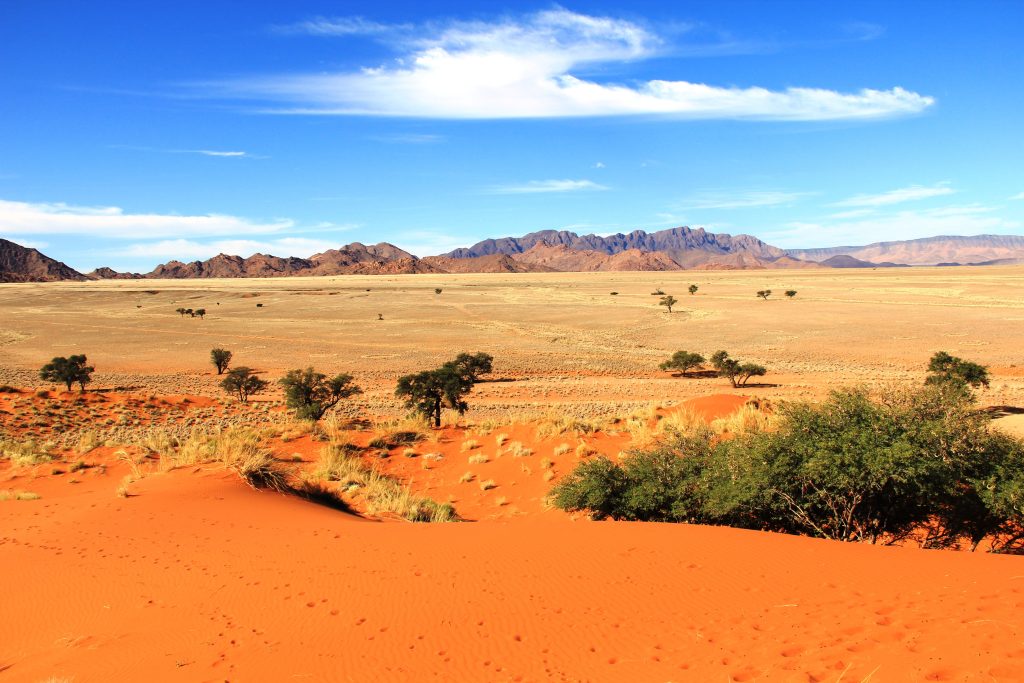
Namibia is among the better African countries for solo travel, with low crime, straightforward self driving and enough infrastructure to be independent without being isolated. The genuine risks are mechanical rather than criminal: a breakdown on an empty gravel road with no phone signal is the scenario to plan around, not crime.
Why It Suits Solo Travellers
Several things make Namibia easier alone than most of the continent.
Crime is low by regional standards and concentrated in Windhoek, where it is mostly opportunistic. Outside the towns the risks stop being criminal almost entirely.
Self driving is straightforward, with tar between main centres, graded gravel elsewhere and clear signage. You do not need a guide to reach the main destinations.
English is the official language and widely spoken in tourism and the towns.
And the country rewards solitude in a way few destinations do. Sitting alone at an Etosha waterhole for an hour, or camping among the Spitzkoppe boulders with nobody in sight, is what Namibia offers and it is better alone than in company.
Tell someone your route each day and set a check in time. Not vaguely: which road, which destination, what time you expect to arrive. Lodge and campsite staff will hold that information if you ask. On roads where you may see three vehicles in four hours and have no phone signal, somebody knowing where you should be is the single most useful precaution available.
The Real Risk Is Mechanical
This is where solo travel in Namibia genuinely differs from solo travel elsewhere.
Gravel road driving carries real risk of tyre damage and rollover, and a puncture on a remote road with nobody passing is the common scenario. Changing a wheel alone on soft verge in 35 degree heat is harder than it sounds.
Mobile coverage is good in towns and along main routes and absent across large areas including Kaokoland, much of Damaraland, the Skeleton Coast and stretches of the south.
Recovery services are slow and distant. There is no equivalent of a breakdown service arriving within the hour.
Practical mitigation is straightforward. Check the spare tyre, jack and tools on collection rather than assuming. Know how to change a wheel before you need to. Carry more water than seems reasonable, at least five litres in the vehicle. Keep the tank above half on remote routes.
Consider a satellite messenger for the remoter areas, which is cheap to hire and turns a serious problem into an inconvenience.
Driving Alone
A few habits matter more when there is nobody in the passenger seat.
Never drive after dark outside towns. This is the single most important rule in Namibia for anyone, and alone it matters more since there is nobody to share the driving or spot animals.
Keep speeds down on gravel. Most tourist accidents involve loss of control on loose surfaces, often at speeds that would be fine on tar.
Break long drives. Fatigue on empty straight roads is a genuine hazard and there is nobody to notice you drifting.
Fuel at every opportunity rather than calculating whether you will make it. Fuel stations are far apart and not all of them have fuel.
Download offline maps before travelling, since navigation apps fail exactly where you need them.
Consider whether you need a 4×4 at all. A two wheel drive handles the main circuit in the dry season, is cheaper and is easier to manage alone.
Personal Safety
The precautions are ordinary and worth stating.
In Windhoek, do not walk after dark; take a taxi. Keep valuables out of sight, phones off tables at pavement cafes, and use ATMs inside banks or shopping centres during the day.
Leave nothing visible in a parked vehicle anywhere in the country, including at trailheads and viewpoints where theft from cars does occur.
Outside the towns, personal safety is rarely an issue. Namibians are mostly reserved and helpful, and travellers report positive interactions consistently.
Women travelling alone report Namibia as comfortable by African standards, with the usual caveats about dressing modestly in towns and villages and being cautious about accepting lifts or invitations from strangers.
Trust your judgement about situations rather than following a rule, and be willing to leave a place that feels wrong.
The Single Supplement
The financial reality of solo travel here is worth being direct about.
Namibian accommodation is largely priced per room or per unit, which means a solo traveller pays close to what two people would at lodges and guesthouses. Single supplements at premium camps can be substantial.
Vehicle rental is the same cost whether one person or two are in the car, so fuel and rental split badly alone.
Camping is the exception and the answer. Campsites are frequently priced per person rather than per site, and camping alone with a rooftop tent is both cheaper and, for many solo travellers, more enjoyable than lodges.
Group tours and small group overland trips remove the supplement problem entirely and are worth considering for anyone whose budget is the binding constraint.
Guest farms are often better value than lodges for single occupancy and tend to be sociable at dinner, which addresses two problems at once.
Meeting People
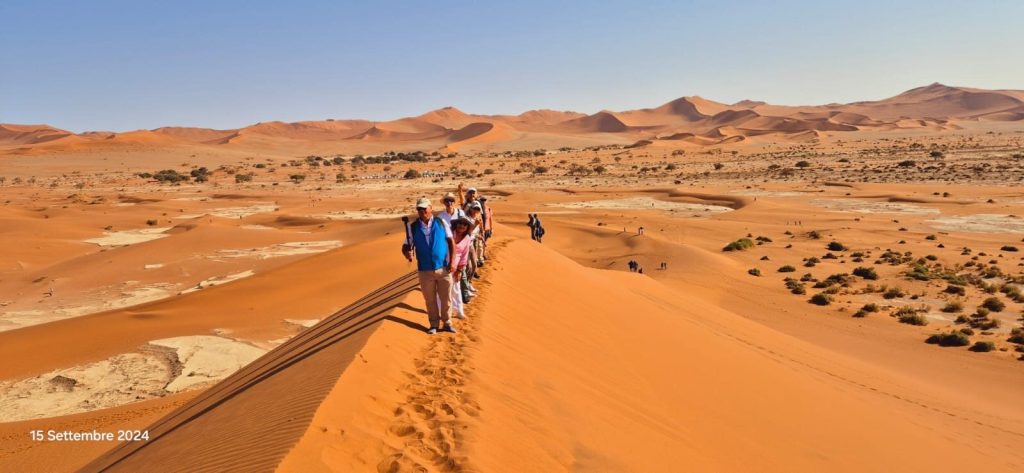
Namibia is quieter socially than the backpacker circuits of East Africa and there are still ways to find company.
Windhoek and Swakopmund have hostels and backpacker lodges where travellers gather, and Swakopmund in particular is where people congregate around activities.
Group activities are the natural meeting point: living desert tours, Sandwich Harbour trips, catamaran cruises, sandboarding and quad biking all put you with other people for a morning.
Guest farms and smaller lodges frequently serve dinner communally at a single table, which is either the best or worst news depending on your temperament.
Campsites are sociable in a low key way, with neighbouring pitches sharing firewood and route information.
Organised small group tours exist for people who want the country without the driving and without the solitude.
Solo and Guided Activities
Some Namibian activities have minimum numbers and it affects solo planning.
Several tours specify a minimum of two people, including some sandboarding and quad biking departures, which means a solo booking may either be refused or charged at the two person rate.
The Fish River Canyon hiking trail requires a minimum party of three, so solo hiking it is not permitted.
Khaudum requires a minimum of two vehicles in convoy, which rules out solo self drive there entirely unless you join a convoy tour.
Rhino tracking, balloon flights, scenic flights and boat cruises all take solo bookings without difficulty, though shared aircraft and boats need other passengers to run.
Ask about minimums when booking rather than discovering them on the morning.
Camping Alone
A good many solo travellers camp and it works well with a few adjustments.
Rooftop tents are the standard arrangement and are well suited to solo travel, setting up in minutes and keeping you off the ground.
At unfenced sites, sleep in the tent or vehicle, do not walk around after dark, and use the vehicle to reach ablution blocks at any distance. Keep food secured inside rather than in a cool box on the table.
Camping is broadly safe even at unfenced sites, since most animals interpret a tent as a large object rather than a container of people.
Choose campsites with other people on them if solitude at night is uncomfortable, and the remote community sites if it is not.
Practise setting up and packing the tent before your first night, since doing it alone in the dark for the first time is a poor introduction.
Best Time for Solo Travel
May to October is the main season and it suits solo travel for practical reasons beyond weather.
Roads are dry and predictable, other travellers are about, campsites are occupied and activities run reliably with the numbers to make minimums.
The green season from November to April is quieter in every sense, with fewer travellers, more availability, lower rates and more solitude than some solo travellers want. Roads deteriorate and some areas become difficult.
Winter nights are cold, which matters more when camping alone with no one to share the driving to a warmer alternative.
Solo Travel in Namibia Questions
Is Namibia safe for solo travellers?
Yes, by African standards. Crime is low and concentrated in Windhoek, where it is mostly opportunistic, and outside the towns personal safety is rarely an issue. The genuine risks are mechanical rather than criminal: a breakdown or puncture on an empty gravel road with no phone signal is the scenario to plan around. Tell someone your route each day and set a check in time.
Is it safe for solo women?
Women travelling alone consistently report Namibia as comfortable by African standards. The usual precautions apply: dress modestly in towns and villages, do not walk in cities after dark, be cautious about accepting lifts or invitations from strangers, and be willing to leave a situation that feels wrong. Outside the towns, interactions are mostly positive and Namibians are reserved and helpful.
Can I self drive alone?
Yes, and most solo travellers do. The main circuit is straightforward with tar between centres and graded gravel elsewhere. The adjustments are practical: never drive after dark outside towns, keep speeds down on gravel, know how to change a wheel before you need to, carry at least five litres of water, fuel at every opportunity and download offline maps. A satellite messenger is worth hiring for remoter areas.
How much more does solo travel cost?
Considerably, because Namibian accommodation is largely priced per room, so a solo traveller pays close to what two would at lodges, with substantial single supplements at premium camps. Vehicle rental and fuel split badly alone too. Camping is the answer, since campsites are frequently priced per person, and guest farms are often better value than lodges for single occupancy.
Are there activities I cannot do alone?
A few. The Fish River Canyon hiking trail requires a minimum party of three. Khaudum requires two vehicles in convoy, which rules out solo self drive there. Several tours specify a minimum of two people, including some sandboarding and quad biking departures, so a solo booking may be charged at the two person rate. Ask about minimums when booking.
Will I meet other travellers?
Namibia is quieter socially than East Africa’s backpacker circuits, and there are still ways. Windhoek and Swakopmund have hostels and backpacker lodges. Group activities such as living desert tours, Sandwich Harbour trips and catamaran cruises put you with people for a morning. Guest farms and smaller lodges often serve dinner communally, and campsites are sociable in a low key way.
Should I camp or stay in lodges?
Camping is cheaper for solo travellers, since sites are frequently priced per person rather than per unit, and rooftop tents suit solo travel well. At unfenced sites, sleep in the tent or vehicle, do not walk around after dark and keep food secured inside. Practise setting the tent up before your first night. Guest farms are the good middle option, better value than lodges and sociable at dinner.
Booking Your Namibia Trip
The safari companies and tour operators listed on this website put trips like this together for a living and know which camps, guides and routes actually deliver. We are an independent guide to Namibia; we do not book or sell tours ourselves.
When you are ready, arrange your safari, tour or holiday with one of the recognised operators listed here. Tell them your dates and what matters most, and a real person, not a form, will handle the itinerary, park bookings and logistics for you.