Where to Stay in Etosha National Park
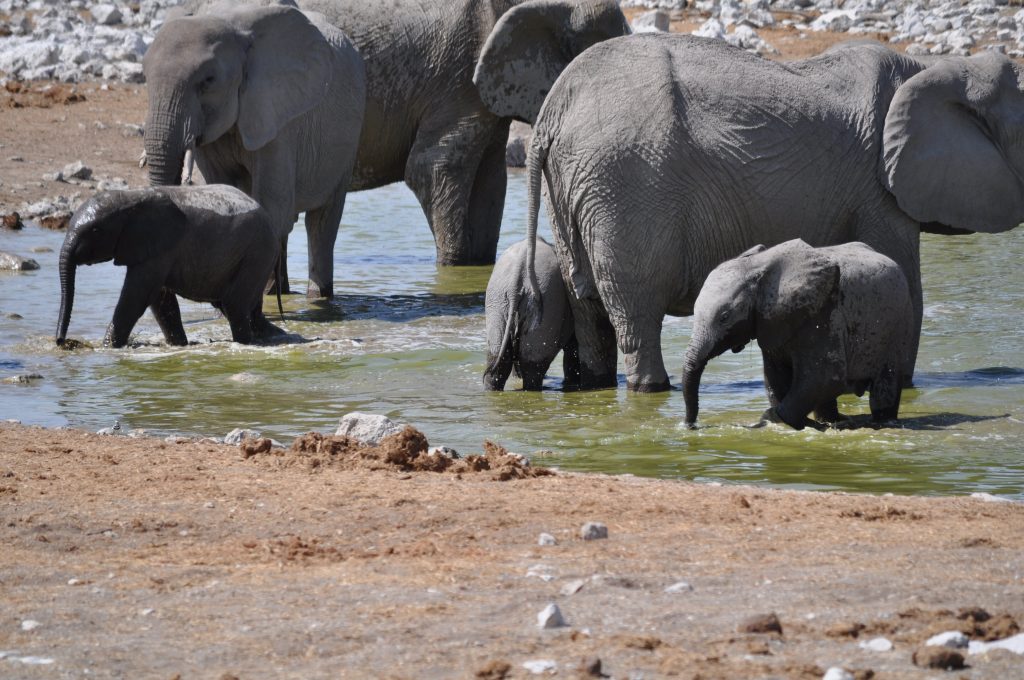
Where to stay in Etosha comes down to one decision before any other: inside the park fence or outside it. Namibia Wildlife Resorts runs six rest camps within the boundary, three of them with floodlit waterholes available to guests all night. Private lodges outside the gates offer better rooms and guided activities the national park cannot. Peak season books out six to nine months ahead.
Why Staying Inside Etosha Changes the Safari
The argument for the rest camps has nothing to do with room quality, which is functional rather than luxurious, and the food is ordinary. It is about hours and access.
Three of the camps have a floodlit waterhole just inside the perimeter fence, viewable on foot from a fixed platform, lit all night. Black rhino come in to drink at Okaukuejo most nights, usually late. Guests outside the park have to leave at gate closing and miss all of it.
The second gain is the morning. Staying inside means you are at a waterhole in the first light rather than queueing at a gate as the sun comes up, and first light is the best game viewing window of the day.
If you can only get one night inside the fence, take it at Okaukuejo and book the outside nights around it. The floodlit waterhole there is the most dependable rhino viewing in Namibia and it is available to you from dinner until you go to bed, which no lodge outside the gate can offer at any price.
Okaukuejo Camp in the South
Okaukuejo is the oldest camp in the park and the busiest, sitting 17 kilometres from Andersson Gate, which makes it the most accessible for anyone arriving from Windhoek.
Its floodlit waterhole is the most famous in Africa and largely deserves it. Elephant, lion, black rhino and spotted hyena come in through the evening and night, sometimes several species at once, and standoffs over drinking rights are common. The camp is structured around a tall stone tower which you can climb for the view over the surrounding plains.
Accommodation runs from campsites through standard rooms to premier chalets facing directly onto the water, and those waterhole facing units are what everyone wants. There is a restaurant, bar, shop, swimming pool and fuel. The Etosha Ecological Institute is based here.
The trade off is numbers. This is the busiest camp in the park and it feels it, particularly around the waterhole platform in the evening. Arrive early to get a seat.
Halali Camp in the Centre
Halali sits roughly halfway between Okaukuejo and Namutoni among shady mopane trees, which is a considerable improvement on the dust of the other camps. It is the smallest and most intimate of the three main camps.
Its waterhole, Moringa, is set below a rocky koppie with an amphitheatre style outlook down to the water, and it has a better reputation than Okaukuejo for leopard and for close elephant viewing, though overall numbers are lower. Black rhino visit too. It is floodlit and reachable on foot at any hour.
The camp has the largest swimming pool in the park, a restaurant, bar and shop, with bush chalets, family chalets, standard rooms and camping. The central position puts you close to Goas, Rietfontein, Salvadora and the pan edge cluster, which is the strongest set of waterholes in Etosha.
Many experienced visitors prefer Halali to Okaukuejo purely for the calmer feel and better setting.
Namutoni Camp in the East
Namutoni is built around a restored German colonial fort, whitewashed towers rising above the bush, and it has a character quite unlike any other camp in Africa. The fort is a national monument and sundowners on its walls are the thing to do here.
The King Nehale waterhole is floodlit and viewed from inside the camp. It is the quietest of the three for game, though it produces some memorable moments, particularly at sunset when hundreds of red billed quelea come in to roost among the reeds. Giraffe silhouetted against the setting sun is the shot people take here.
The eastern section around the camp is species rich, with Chudop, Klein Namutoni, Kalkheuwel and Fischer’s Pan all within reach. Two restaurants, a shop, pool and fuel are on site, with en suite rooms, bush chalets and camping. Campers consistently rate the pitches here highest of the three main camps, since they are grassed rather than dusty and usually quieter.
Onkoshi Camp on the Pan Rim
Onkoshi is the most exclusive property Namibia Wildlife Resorts runs and one of the more spectacular settings in Africa. Fifteen chalets sit on elevated wooden decks right on the eastern rim of the Etosha Pan, looking out across the white expanse to the horizon.
It is low impact and deliberately remote, reached only by camp transfer rather than driving in yourself. There is no through traffic and no other camp anywhere near.
The trade off is that you are away from the productive southern waterhole circuit, and the pan view is the point rather than the game viewing. Couples and photographers rate it highly. Anyone whose priority is animals per day will do better at Okaukuejo or Halali.
Dolomite Camp in the West
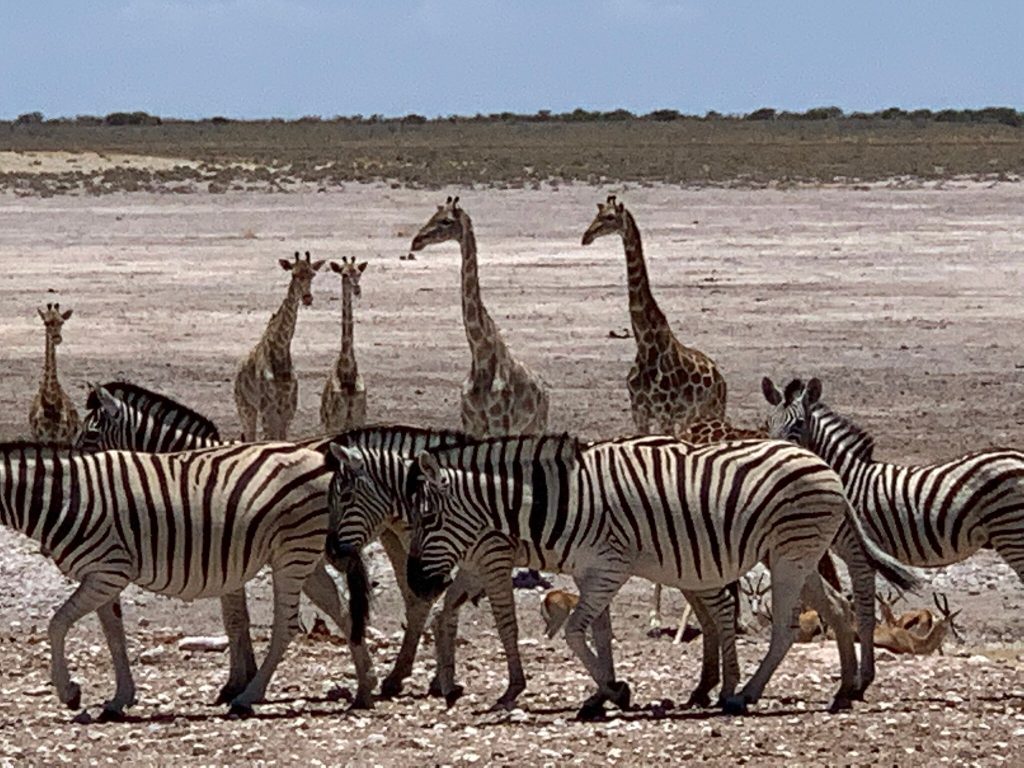
Dolomite sits on a ridge in the western section, roughly 180 kilometres from Okaukuejo, with about twenty elevated tented chalets scattered through the rock. That distance tells you how much space you have.
The western section was closed to general visitors for years and reserved for researchers and permit holders. It is now the quietest part of the park by a wide margin, with low traffic, broken terrain and strong black rhino numbers.
Guests entering at Galton Gate are restricted to guided drives rather than self driving the western zone, so this is a different kind of stay from the main camps. It suits repeat visitors who have already done the southern circuit and want Etosha with fewer vehicles at every sighting.
Olifantsrus Camping Camp
Olifantsrus is the newest camp in the park and the only camping exclusive one, with no chalets at all. Ten pitches sit in the remote northwest between Okaukuejo and Dolomite, with shared power stands and basic facilities.
Its double storey photographic hide over the waterhole is the reason to come. Sitting at eye level with animals at the water, in silence, is a completely different experience from watching from a vehicle, and photographers who know about it book early.
Black rhino are well established in this quieter section. It is the least developed option in the park and, for self sufficient campers, arguably the best value.
Okaukuejo. South, 17 km from Andersson Gate. The famous floodlit waterhole and the best rhino viewing in the park. Busiest camp, full facilities, book earliest.
Halali. Central, shady mopane, Moringa waterhole below a koppie. Better for leopard, calmer than Okaukuejo, largest pool. Closest to the strongest waterhole cluster.
Namutoni. East, built around a German fort. Quieter waterhole, species rich surroundings, the best campsites of the three main camps.
Onkoshi, Dolomite, Olifantsrus. The remote three. Pan rim exclusivity, western wilderness with guided drives, and a camping only site with a photographic hide.
Private Lodges and Reserves Outside the Gates
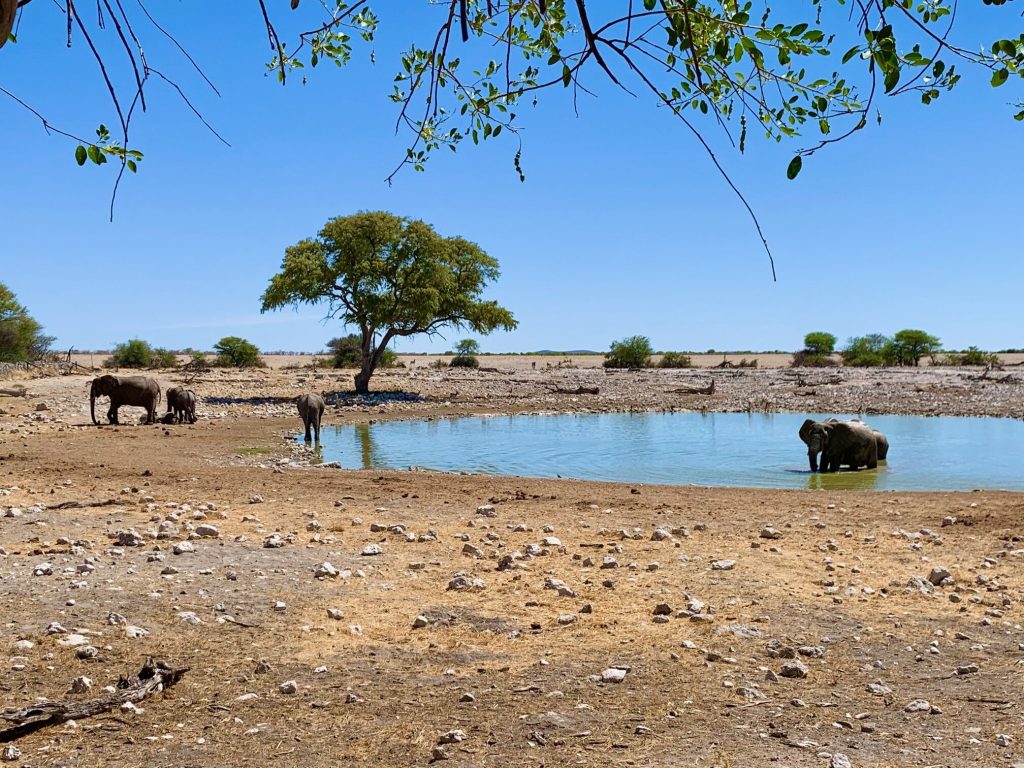
A ring of private reserves borders the park and they run a different product entirely. Ongava covers around 30,000 hectares on the southern boundary near Andersson Gate, holding lion, both black and white rhino and high plains game densities, with properties from the main lodge through a tented camp to the three suite Little Ongava.
Onguma sits on the eastern side near Von Lindequist Gate with a spread of camps up to The Fort. Mushara, Etosha Safari Lodge, Taleni properties and Okutala fill the mid range, and there are guesthouses and campsites at both main gates.
What these buy you is activity freedom: open vehicle game drives with a guide, night drives, guided walking with an armed guide and waterhole hides, none of which is permitted for ordinary visitors inside the national park. Rooms and food are considerably better. What you lose is the floodlit waterholes and the dawn start inside the fence.
Many travellers split the stay to get both, which is the strongest answer if the budget allows.
Booking Etosha Rest Camps
The rest camps are booked through Namibia Wildlife Resorts, either online or through their reservation offices, and they sell out well before anything else in Namibia.
Six to nine months ahead is the working guide for July to September. Okaukuejo waterhole facing chalets go first, followed by Halali and Namutoni. Dolomite and Olifantsrus, remote as they are, book out three months ahead or more because they hold so few units.
Rates have been revised and now include meals on some room types and breakfast only on others, which was not previously the case, so check what your booking covers. Shoulder and green season availability is far more relaxed and can often be arranged a month or two out.
Best Time to Book and Stay
The dry season from May to October is when the camps matter most, since the floodlit waterholes are at their most productive and animals have nowhere else to drink. July through September is peak for both game and occupancy.
Nights are cold through those months, dropping to single figures and near freezing in June and July, and the waterhole platforms are outdoors and unheated. People give up on excellent sightings purely because they came out in a shirt, so bring a proper jacket.
Green season from November to April offers availability, lower rates and a quieter park, at the cost of dispersed game.
Getting to the Etosha Camps
Okaukuejo is 17 kilometres from Andersson Gate in the south, reached from Windhoek via Otjiwarongo and Outjo, around 440 kilometres. Namutoni sits about ten kilometres inside Von Lindequist Gate in the east, reached via Tsumeb. Halali is roughly halfway between them on the main road.
Dolomite and Olifantsrus are in the west, with Dolomite accessed via Galton Gate from Kamanjab. Onkoshi is reached only by transfer arranged with the camp, since guests cannot drive in.
Fuel is available at Okaukuejo, Halali and Namutoni. Roads between camps are graded gravel suitable for a standard car in the dry season, and gate and camp curfews are enforced strictly.
Etosha Accommodation Questions
What do the Etosha rest camps cost?
Rooms and chalets have run roughly 900 to 2,500 Namibian dollars per night depending on camp and whether the unit faces the waterhole, with rates recently revised and now including meals on some room types. Campsites sit broadly in the 300 to 600 Namibian dollar range per person. Private lodges outside the gates run much wider, with the upper tier near Ongava and Onguma from roughly 3,000 to 7,000 Namibian dollars per person per night including meals and activities. Park fees are separate.
Which Etosha camp is best?
Okaukuejo for the floodlit waterhole and the most dependable black rhino viewing, accepting that it is the busiest. Halali for a calmer stay, a better setting under mopane trees and proximity to the strongest waterhole cluster. Namutoni for the fort, the eastern circuit and the best camping pitches. Splitting two or three nights between Okaukuejo and one of the others is what most experienced visitors do.
Should I stay inside Etosha or at a lodge outside?
Inside if you can get it, at least for part of the stay, because the floodlit waterholes and the dawn start are only available to guests within the fence. Outside lodges give better rooms, better food, guided night drives and walking that the park does not permit. Splitting the stay gets you both, and it is the answer when the budget allows.
How far ahead should I book?
Six to nine months for July through September, and earlier again for waterhole facing chalets at Okaukuejo. Dolomite, Onkoshi and Olifantsrus hold very few units and go three months out or more for the same reason. Green season from November to April is far easier and can often be arranged a month or two ahead.
Is camping in Etosha worth it?
Yes, and it is among the best value in Namibian travel. Campers at Okaukuejo, Halali and Namutoni get exactly the same floodlit waterhole access as chalet guests at a fraction of the cost, along with the same dawn start. Namutoni has grassed pitches and is usually the quietest. Olifantsrus is camping only and adds a photographic hide. Nights are cold, so bring a proper sleeping bag.
Which camp has the best waterhole?
Okaukuejo by reputation and by results, with black rhino appearing most nights and frequent elephant and lion. Moringa at Halali is the connoisseur’s choice, set below a koppie with better leopard odds and closer elephant viewing at lower overall volume. Namutoni is the quietest of the three, best at sunset for the quelea flocks and giraffe silhouettes.
Can I book Etosha camps at the gate?
Not reliably, and in peak season not at all. The rest camps are booked through Namibia Wildlife Resorts and travellers arriving hoping to find a room are routinely turned away between July and September. Overnight permits at the gate depend on a confirmed booking. In the green season walk in availability is more realistic, though it is still a poor plan.
Booking Your Namibia Trip
The safari companies and tour operators listed on this website put trips like this together for a living and know which camps, guides and routes actually deliver. We are an independent guide to Namibia; we do not book or sell tours ourselves.
When you are ready, arrange your safari, tour or holiday with one of the recognised operators listed here. Tell them your dates and what matters most, and a real person, not a form, will handle the itinerary, park bookings and logistics for you.