Walvis Bay Lagoon and Pelican Point
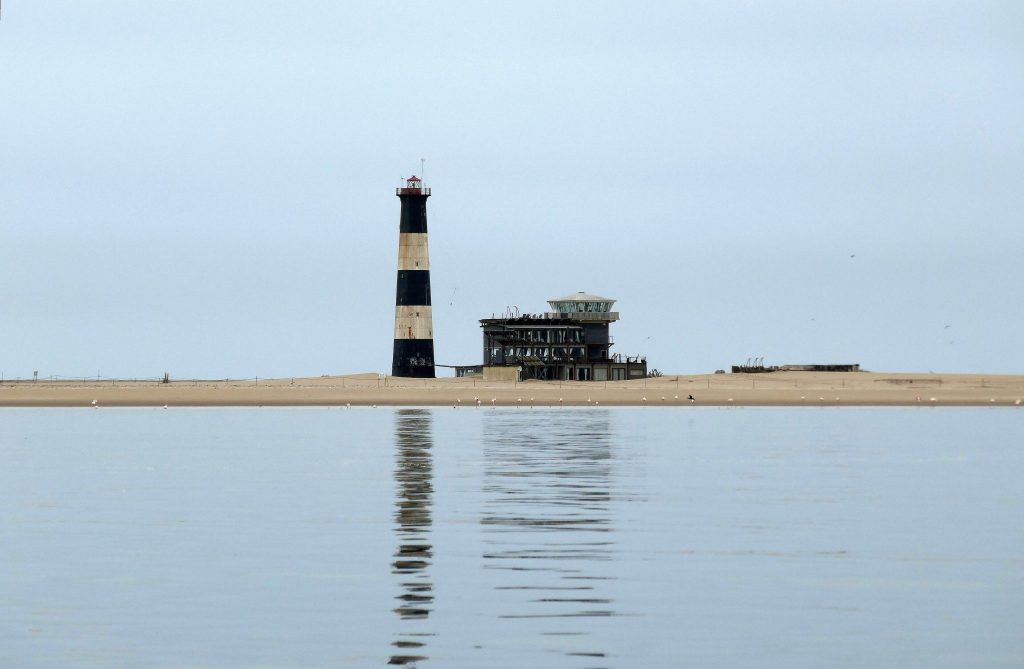
The Walvis Bay Lagoon is a Ramsar listed wetland holding tens of thousands of flamingos and one of the most important shorebird sites in southern Africa, sheltered behind the sand spit of Pelican Point. The peninsula carries a lighthouse and a Cape fur seal colony estimated at around 50,000 animals. The lagoon is free to walk; the point needs a boat or a 4×4.
How the Lagoon and the Spit Were Formed
The whole system exists because of wind and current working in one direction over a very long period.
Prevailing southwesterly winds and the northward Benguela current pushed sand up the coast and built the Pelican Point spit, a narrow finger of land curling north and then east. That spit blocked channels of the Kuiseb River and created a shallow tidal basin behind it, protected from the open Atlantic swell.
The result is a large area of mudflat that floods and drains twice daily, plus the adjoining salt works with their evaporation pans. Shallow, sheltered, nutrient rich water in a desert is an unusual combination, and it is why the bird numbers here are what they are.
The protected area covers over 10,000 hectares taking in the lagoon, part of the peninsula, the intertidal flats and the salt works, and it sits within Dorob National Park.
Flamingos and the Bird Numbers
Counts vary depending on season and method, with recorded totals running from around 37,000 up to figures well into six digits at peak, and over 150 species logged across the wetland.
Flamingos are the headline. Both greater and lesser are present year round, with numbers building into the tens of thousands as migrants arrive. Greater flamingos filter larger organisms from the mud while lesser flamingos take microscopic algae, which is why the two species share the same flats without competing.
Great white pelican work the deeper channels and give the peninsula its name. Cape cormorant gather in enormous rafts, and artificial platforms built for guano collection still stand in the bay.
Among the waders, chestnut banded plover favours the salt pans and is a near threatened species with a large share of its world population here. African black oystercatcher patrol the shoreline. Damara tern, endangered and largely confined to this coast, breeds on the flats nearby.
Palearctic migrants make up much of the summer count, arriving from Europe and Siberia after flights of ten to fourteen thousand kilometres, which is why serious birders schedule Namibian trips for the green season rather than the dry one.
Walk the lagoon boardwalk at first light and you will have flamingos within a few metres of the path, water like glass and light coming across the lagoon rather than into your lens. It costs nothing, needs no booking and no guide, and it is comfortably the best hour of the day in Walvis Bay. By mid morning the wind is up and the birds have moved out.
Walking the Lagoon Boardwalk
What makes this wetland unusual among great birding sites is that you need nothing to see it. A paved walkway runs several kilometres along the lagoon edge, birds feed within metres of it, and there is no gate, fee, permit or guide involved.
The stretch known locally as Millionaires Mile, lined with houses facing the water, is where most people start. Benches and pull offs run along it and the flamingos concentrate in the shallows just off the path.
Bring binoculars. Much of what is interesting here is small waders on mud rather than pink birds at close range, and the difference between a pleasant walk and a serious birding session is optics.
The salt works north of the lagoon add pink evaporation pans and further concentrations of birds. Access varies, so ask locally rather than assuming you can drive in.
Pelican Point Seal Colony and Lighthouse
The peninsula enclosing the bay holds a Cape fur seal colony commonly estimated at around 50,000 animals, along with a lighthouse that has become the landmark of the whole area.
Reaching it means either a boat across the bay or a 4×4 along the spit, and the land route is soft sand that needs proper capability. Most visitors go by water.
What sets this colony apart from Cape Cross is the interaction. Seals here are habituated to boats and swimmers, they come to vessels readily, and on kayak trips they come right in at water level out of curiosity. It is a completely different experience from watching a colony from a boardwalk.
A small lodge operates out at the point beside the lighthouse for travellers wanting genuine isolation, reached by 4×4 along the spit. There is a shipwreck visible along the route.
Boat Trips, Kayaking and Marine Wildlife
Catamaran cruises are the standard way out to the point, running three to four hours from the waterfront, passing the oyster platforms on the way and usually finishing with fresh oysters and sparkling wine on board.
Seals climb aboard for a handout and pelicans land on the deck, both of which are routine rather than lucky. Heaviside’s dolphins, endemic to this coast, and bottlenose come to the bow regularly. Mola mola sunfish and leatherback turtles are recorded, and humpback and southern right whales are seasonal and occasional rather than dependable.
Sea kayaking is the quieter alternative and many people prefer it. Trips drive out along the spit past the salt works and the lagoon, then paddle among the seals at water level. Being eye to eye with a curious animal in its own element is not comparable to watching from a deck.
Full day 4×4 tours combine Pelican Point with Sandwich Harbour to the south, timed around the tide.

The Salt Works and the Self Repairing Road
The salt works beside the lagoon are among the larger operations of their kind and produce the pink pans that appear in every photograph of this coast. The colour comes from algae and the microorganisms that thrive in high salinity water, which are also what the flamingos are eating.
The road out along the spit is worth a mention on its own. It is built from local salt and gypsum, and the surface behaves unusually: it softens when damp, then compacts under the weight of passing vehicles, which in practice repairs its own potholes. Guides point it out and it is a genuinely clever piece of accidental engineering.
The industry and the wetland are more entangled here than the usual conservation story allows. The evaporation pans form part of the protected area and the nutrients in them sustain a large share of the birdlife.
Conservation Pressures on the Wetland
A working deepwater port, a salt industry and one of Africa’s most important coastal wetlands occupying the same few kilometres is an inherently awkward arrangement.
Development pressure, disturbance from vehicles on the flats and changes to water flow all bear on the site, and the Damara tern breeding grounds nearby are closed to vehicles for exactly that reason. Driving is regulated across Dorob National Park and the restrictions exist because tyre damage on these surfaces lasts for decades.
Practically, visitors should stay on the boardwalk and marked routes, keep back from feeding flocks rather than walking into them to get closer photographs, and take rubbish away. Flushing a flock costs the birds energy they are here to accumulate.
Best Time to Visit the Lagoon and Pelican Point
The coast stays cool and often fogbound whatever the interior is doing, so this works year round and is at its most useful when the desert is above 40 degrees.
For birding, roughly November to April is strongest, when Palearctic migrants swell the counts and flamingo numbers peak. December and January bring Namibian and South African holidaymakers to the coast, so the towns are full at exactly the point the birding peaks.
Time of day matters more than season. Mornings are calm and the light works; afternoons bring wind strong enough to cancel boat trips and make the boardwalk unpleasant. Book marine activities for the morning slot wherever possible.
Getting to the Lagoon and Pelican Point
The lagoon runs along the southwestern edge of Walvis Bay town and the boardwalk is reached on foot or by a short drive from anywhere in town. Walvis Bay is 30 kilometres south of Swakopmund on tar, half an hour, and roughly 390 kilometres from Windhoek.
Pelican Point is reached by boat from the waterfront, which is how most visitors go, or by 4×4 along the spit past the salt works, which is soft sand needing proper capability and local knowledge.
Walvis Bay Airport handles scheduled flights from Windhoek and a small number of regional services, which suits a trip starting on the coast. Cruise ships call at the port, and their passengers are a large part of the market for half day lagoon and Sandwich Harbour tours.
Walvis Bay Lagoon Questions
Does it cost anything to visit the lagoon?
Walking the lagoon boardwalk is free, with no gate, permit or guide required, which is unusual for a wetland of this importance. Costs apply only to activities: a catamaran cruise to Pelican Point runs roughly 80 to 90 US dollars per person for three and a half to four hours including oysters and sparkling wine, and seal kayaking around 90 dollars. Full day 4×4 trips combining Pelican Point with Sandwich Harbour run considerably higher.
When are the flamingos at Walvis Bay?
Both greater and lesser flamingos are present year round, so no month misses them. Numbers build from around October through April as migrants arrive and the wetland fills, reaching into the tens of thousands. Early morning gives the closest views from the boardwalk, before the wind picks up and the birds move further out onto the flats.
How do I get to Pelican Point?
By boat from the Walvis Bay waterfront, which is how most visitors go and which takes about an hour each way as part of a catamaran cruise. The alternative is a 4×4 along the sand spit past the salt works, which needs genuine capability and local knowledge of the sand. Kayaking trips drive out and then paddle. There is a lodge at the point for anyone wanting to stay.
Will I see seals and dolphins?
Cape fur seals are close to certain, since the colony at Pelican Point runs to around 50,000 animals and they are habituated enough to come aboard boats. Pelicans landing on the deck are equally routine. Heaviside’s dolphins, which are endemic to this coast, and bottlenose are likely rather than guaranteed and most cruises find them. Whales are seasonal and occasional, so treat any sighting as a bonus.
Is the lagoon worth visiting if I have limited time?
Yes, and it is the best value hour on the Namibian coast. The boardwalk costs nothing, needs no booking and puts flamingos within metres of you, which almost no wetland of this standing offers. If you only have a morning in Walvis Bay, walk the lagoon at sunrise rather than trying to fit in a boat trip.
Why is the water pink at the salt works?
Algae and microorganisms that thrive in very high salinity water give the evaporation pans their colour. The same organisms are what the lesser flamingos feed on, which is why the birds concentrate around the pans. The salt works form part of the protected wetland rather than sitting outside it, so the industry and the birdlife are closely tied together here.
Can I take a kayak trip with the seals?
Yes, and many visitors rate it above the catamaran. Trips drive out along the spit past the lagoon and salt works, then paddle among the seals at Pelican Point. Being at water level with animals that come to you out of curiosity is a different experience from watching from a deck. Operators brief you on how to behave around the colony, and no paddling experience is needed.
Booking Your Namibia Trip
The safari companies and tour operators listed on this website put trips like this together for a living and know which camps, guides and routes actually deliver. We are an independent guide to Namibia; we do not book or sell tours ourselves.
When you are ready, arrange your safari, tour or holiday with one of the recognised operators listed here. Tell them your dates and what matters most, and a real person, not a form, will handle the itinerary, park bookings and logistics for you.