Sandwich Harbour
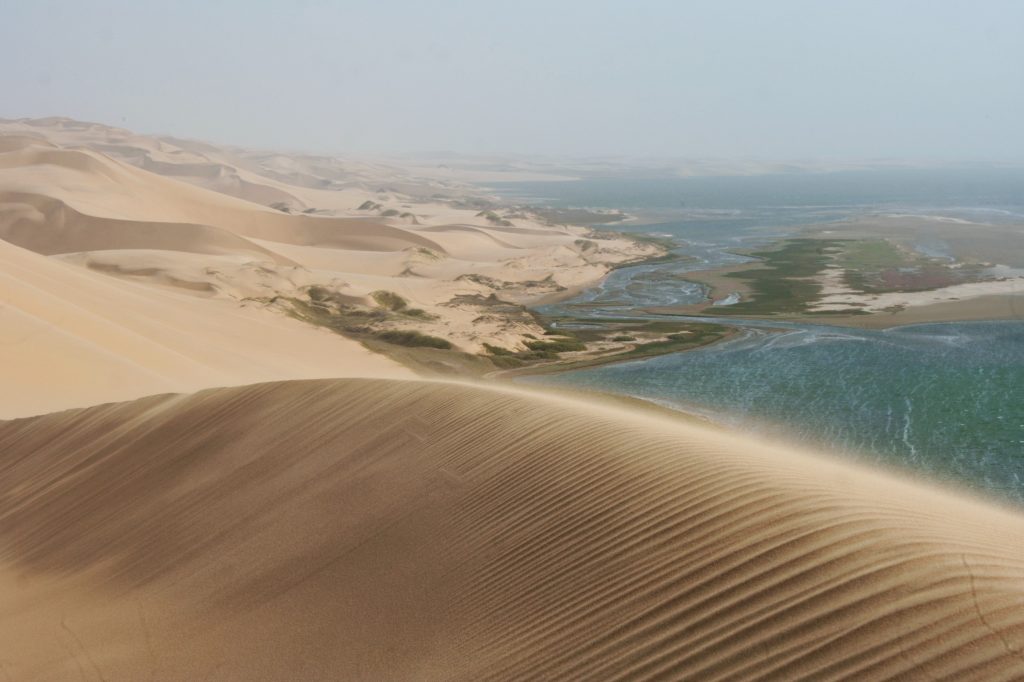
Sandwich Harbour is a coastal wetland roughly 50 kilometres south of Walvis Bay where the dunes of the Namib run straight into the Atlantic. It sits inside Namib-Naukluft National Park, is Ramsar listed, and is reached only by guided 4×4 timed around the tide. It is among the least accessible places in Namibia and among the most important coastal wetlands in southern Africa.
Sandwich Harbour 4×4 Tours and Tide Timing
Getting there is half the point and it cannot be done casually. The beach route south from Walvis Bay is only open at low tide, and when the water is up, vehicles have to climb over the dune faces instead.
That tidal dependence governs every tour. Departure times move day to day, operators plan the route on the morning, and guides will tell you honestly that reaching the lagoon itself is conditional rather than guaranteed. If the tide and conditions do not allow it, tours substitute dune viewpoints and the drive rather than forcing the beach.
Half day trips run around four to five hours and typically reach the dune viewpoints above the wetland. Full day versions take five to six hours or more and usually add Pelican Point, with a stop for a meal along the way. Both leave from Walvis Bay, with Swakopmund pickups available at a supplement and an earlier start.
The dune driving on the way is what people talk about afterwards. Guides run the vehicles along slip faces at angles that feel alarming and are entirely routine for them.
Book Sandwich Harbour for early in your coastal stay rather than the last day. Tide, weather and wind all affect whether the lagoon is reachable, and operators do cancel or substitute. Leaving a spare day means you can rebook rather than losing the trip entirely, which is the commonest disappointment on this coast.
The Wetland, the Freshwater Springs and the Reed Beds
What makes Sandwich Harbour ecologically important is water arriving from underneath rather than from a river.
Freshwater seeps out beneath the dunes along the northern edge of the bay, feeding reed beds and marsh in a place with almost no rainfall. That combination of fresh seepage, tidal saltwater and sheltered mudflat is what supports the bird numbers, and it is why the site was Ramsar listed as a wetland of international importance.
The bay itself runs roughly four kilometres wide and a little over four long. It was once a genuine freshwater lagoon, and storms and swell have breached its banks over time, pushing saltwater in and changing the balance. The mouth has repeatedly sanded up, which is one of several reasons it never worked as a harbour, whatever the name suggests.
Reed beds against dunes against ocean is a combination you will not see elsewhere on this coast, and it is the reason the place looks unlike anywhere else in Namibia.
Birdlife at Sandwich Harbour
Around 155 bird species have been recorded here, and counts of birds using the lagoon and the beaches between Walvis Bay and Sandwich have run into the tens of thousands.
Flamingos are the ones most visitors come for, both greater and lesser, feeding on the shallow flats. Great white pelican work the deeper water. Waders make up the bulk of the numbers: turnstone, avocet, sandpiper, plover and curlew among them, many of them Palearctic migrants arriving from Europe and Siberia through the summer months.
Gulls and terns are constant, including the Damara tern, an endangered species largely confined to this coast that breeds on the gravel flats nearby.
Birding here is at its strongest from around November to April when the migrants are present, which is the opposite of the inland game viewing season and worth knowing when planning.
Wildlife on the Drive South
The route between Walvis Bay and the wetland crosses the Kuiseb delta and the dune belt, and there is more life along it than the terrain suggests.
Oryx, springbok and ostrich work the sparse vegetation of the nara valleys, feeding on the nara melon, a spiny plant that anchors dune hummocks and survives largely on coastal fog. Black backed jackal patrol the beach. Brown hyena are present and mostly nocturnal, though their tracks along the sand are frequently pointed out.
Cape fur seals appear along the shoreline, with the main colony at Pelican Point to the north. Whale and dolphin sightings offshore are occasional rather than dependable.
The Kuiseb delta is also home to the Topnaar community, who have lived along this river and its nara fields for a very long time, and guides on the southern route often point out their settlements.
Guano, Whaling and the Failed Harbour
The name suggests commerce and the history bears that out, though none of it succeeded for long.
Seafarers used the bay for fresh water, meat, whaling and fishing from at least the late eighteenth century, when a British whaling company chartered a vessel to work this coast. Fresh water in this stretch of desert was reason enough to stop.
Guano extraction followed and was the most substantial industry here. Sand was pumped onto an island in the bay to enlarge it and raise it above spring tides so the guano layer would survive, an ambitious piece of engineering that failed for an unexpected reason: jackals worked out how to reach the island at low tide and scared the birds off it.
With the bay sanding up, trucks bogging in the soft conditions and no commercial future, the operation was abandoned. The area became a nature park in the middle of the last century and was later folded into Namib-Naukluft National Park.

Permits and Why Self Driving Is a Bad Idea
Sandwich Harbour lies inside Namib-Naukluft National Park and a permit is required, obtained from Ministry offices in Walvis Bay, Swakopmund or Windhoek rather than at a gate. Operators handle the paperwork as part of a booked tour.
Technically you can drive it yourself with a permit and a capable 4×4. In practice this is one of the few places in Namibia where independent travel is genuinely inadvisable.
The reasons stack up. The beach route closes with the tide and the water does not negotiate. Sand conditions change daily. There is no phone signal for much of it, no recovery service and no traffic to flag down. Vehicles do get stranded, and the cost and difficulty of recovery here are substantial. Operators run this route daily, know the tide tables and the current sand, and the price of a tour is far less than a recovery.
Photographing Sandwich Harbour
The signature shot is the dune face dropping straight into the ocean, taken from the high ground above the bay, and it is worth the climb operators make you do to get there.
Light works best in the morning before the wind builds and the haze thickens, which suits the tour timings anyway. Fog is common early and usually lifts by late morning, so an early departure can start in grey and improve fast.
Sand and salt spray are the practical problems. Keep gear sealed between shots, change lenses as little as possible, and expect fine sand to get into everything. A polarising filter helps with glare off water and wet sand.
Best Time to Visit Sandwich Harbour
The coast stays cool and often fogbound year round, so season affects the birding more than comfort. From November to April the Palearctic migrants are present and the counts are at their highest, which is the strongest window for birders.
For general visiting, any month works. Morning departures are better than afternoon in every season, since wind builds through the day and can affect both the driving and the experience.
The variable that actually decides your trip is the tide rather than the calendar. Operators plan around it, so ask when booking which days give the better tidal windows if your dates are flexible.
Getting to Sandwich Harbour
Tours depart from Walvis Bay, typically from a meeting point near the lagoon, with Swakopmund pickups available about forty minutes earlier at a supplement of roughly 100 to 300 Namibian dollars.
Walvis Bay is 30 kilometres south of Swakopmund on tar and around 390 kilometres from Windhoek. Walvis Bay Airport handles scheduled flights from the capital, which makes a coastal stay easy to reach without the drive.
The wetland is roughly 50 to 60 kilometres south of Walvis Bay, and the drive takes one to two hours each way depending on route and tide.
Sandwich Harbour Questions
What does a Sandwich Harbour tour cost?
Half day 4×4 trips run roughly 140 to 200 US dollars per person, quoted locally at around 2,600 Namibian dollars with a minimum of two people. Full day versions including Pelican Point run closer to 200 to 270 US dollars. Pickup from Swakopmund rather than Walvis Bay adds a supplement of roughly 100 to 300 Namibian dollars. Park permits are usually included in the tour price, so check when booking.
Can I drive to Sandwich Harbour myself?
Legally yes with a permit and a capable 4×4, practically it is a poor idea. The beach route closes at high tide, sand conditions change daily, there is no phone signal across much of it and no recovery service. Vehicles do get stranded and recovery is slow and expensive. Almost everyone goes with an operator, and the tour costs considerably less than being pulled out.
Will I definitely reach the lagoon?
No, and reputable operators say so upfront. Access depends on tide, weather and conditions on the day. When the beach route is closed, tours take the dune route to get as close as possible and substitute viewpoints, which is still a strong trip but not the same as standing at the wetland. Booking early in your stay leaves room to try again.
How long does a Sandwich Harbour trip take?
Half day tours run about four to five hours from Walvis Bay including the drive each way. Full day trips take five to six hours or more and usually add the Pelican Point seal colony and a meal stop. Add roughly eighty minutes in total if you are being collected from Swakopmund.
Is Sandwich Harbour suitable for children?
Most operators take families and the dune driving is popular with older children. Consider that it is a long day in a vehicle on rough terrain, there are no facilities once you leave Walvis Bay, and the dune descents are steep enough to unsettle nervous passengers. Check age policies with the operator, since some set minimums.
Why is it called Sandwich Harbour?
The origin is not settled. Explanations include a corruption of a German or Dutch word, an early whaling vessel of that name, and various other accounts, none of them conclusive. What is clear is that it never functioned as a harbour for long, since the mouth repeatedly sanded up and the bay proved unworkable for shipping, whatever the whaling and guano operations attempted.
What birds will I see at Sandwich Harbour?
Flamingos, both greater and lesser, along with great white pelican and large numbers of waders including turnstone, avocet, sandpiper and plover. Around 155 species have been recorded. The strongest period is roughly November to April when Palearctic migrants arrive from Europe and Siberia. The endangered Damara tern breeds on gravel flats in the wider area.
Booking Your Namibia Trip
The safari companies and tour operators listed on this website put trips like this together for a living and know which camps, guides and routes actually deliver. We are an independent guide to Namibia; we do not book or sell tours ourselves.
When you are ready, arrange your safari, tour or holiday with one of the recognised operators listed here. Tell them your dates and what matters most, and a real person, not a form, will handle the itinerary, park bookings and logistics for you.